

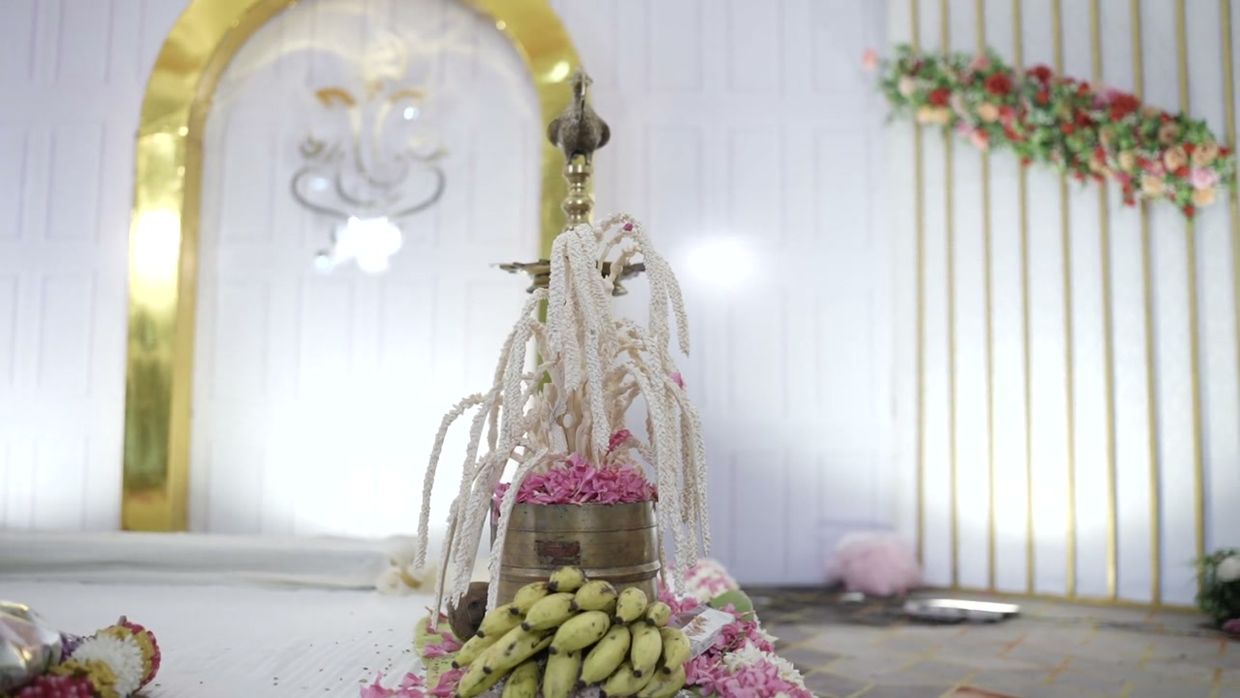
One wedding, four events, one timeline
We design, organise and run multi-day Indian and destination weddings end to end, so the family can be present at their own celebration.
What this includes
Ceremony and muhurat planning
Sangeet, mehendi and reception
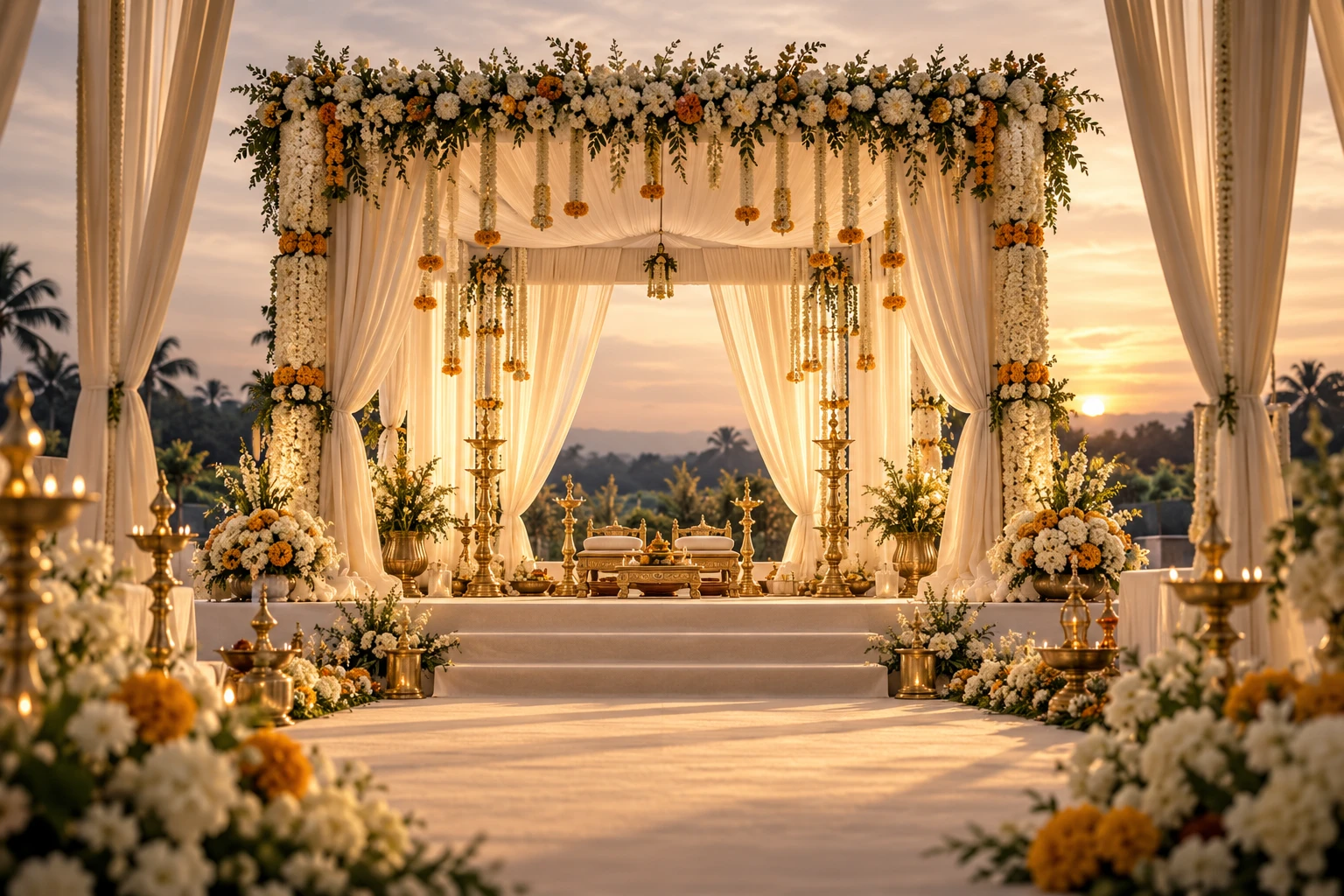
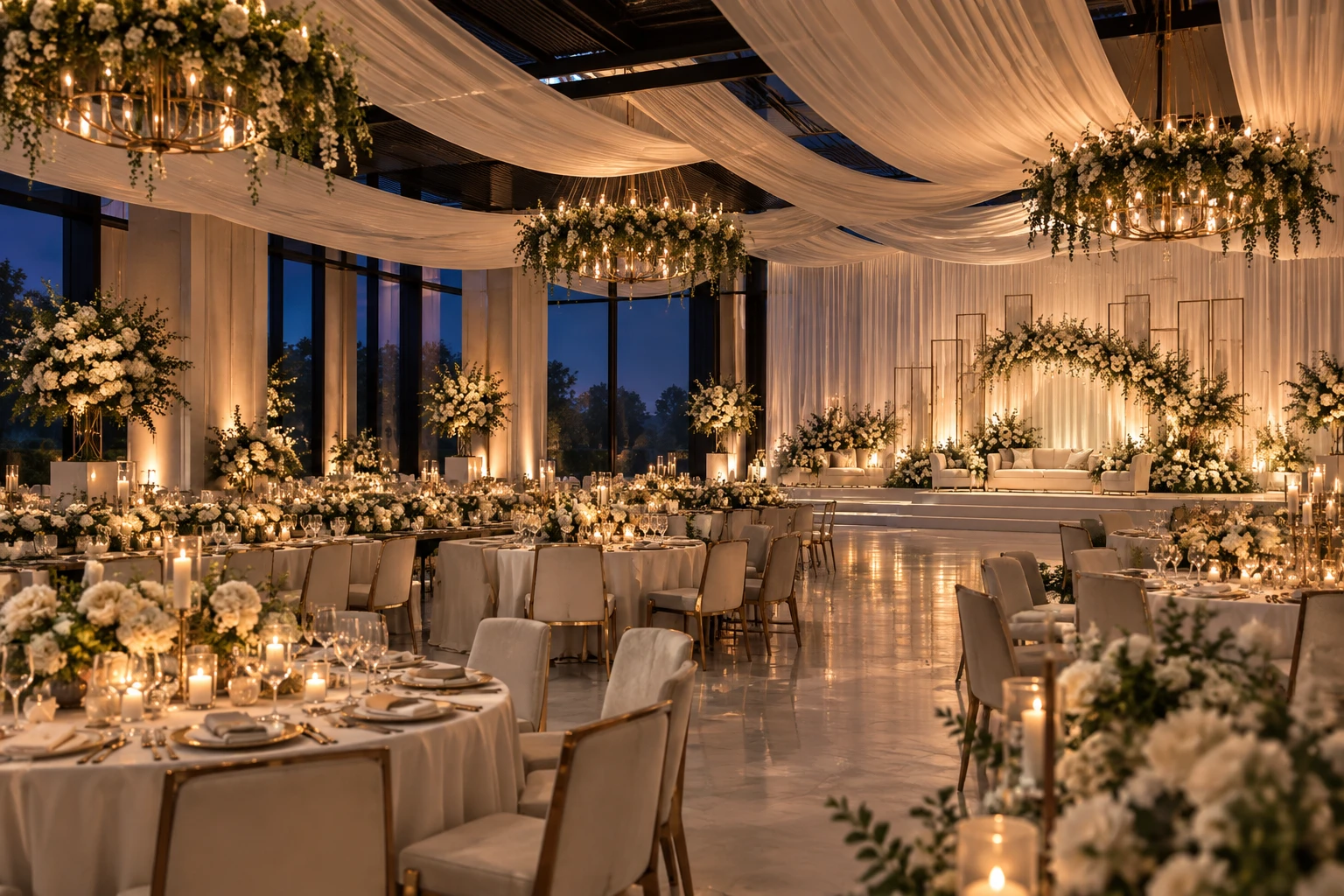
Décor, staging and lighting
Guest travel and accommodation
Vendor contracting and run of show

The process
How we deliver it
01
The schedule
Every function is set against the muhurat first.
02
The design
Décor, staging and light are drawn to fit the schedule.
03
The build
Vendors work to our call times; the build is checked against the drawings.
04
The day
One producer calls every function. The family stays guests.
How we run it
The family should not be the coordination layer
An Indian wedding is not one event. It is a sequence of them, each with its own guests, its own venue and its own call time — and one of them cannot move.
The mehendi, the sangeet, the ceremony and the reception are four different events sharing a guest list. They rarely share a venue, they never share a mood, and the one in the middle is fixed to a time nobody negotiates with. Most of what goes wrong at a wedding is not a failure of taste. It is two functions colliding because nobody owned the hour between them.
The schedule comes before the design
Design comes second. First we lay out every function against the muhurat and work outward from it — when each room has to be clear, when each one has to be dressed, when guests move and how long that movement actually takes with elders and children in the group. That document is the wedding. The décor, the stage and the lighting are then designed to fit inside it, rather than being designed first and squeezed in afterwards.
It is an unglamorous way to start and it is the reason the rest holds.
The muhurat does not move
Every other element is negotiable and that one is not, so the schedule is built backwards from the auspicious hour rather than forwards from the first function. It changes what we commit to. A mandap that needs a long dress time does not get chosen for a morning ceremony. A sangeet that runs late is planned with the next morning’s call time already in it, not discovered against it.
One team, from first drawing to last car
Décor, staging, lighting and audio are built in-house through our production services — so a change to the stage is a conversation, not a chain of three phone calls and a revised quote. Guest travel, accommodation and the arrival experience sit with the same team through hospitality and logistics. Where a specialist is genuinely better than us at something, we contract them and hold their call times ourselves.
The point is not that in-house is cheaper. It is that nothing gets lost in a handover between vendors who have no reason to talk to each other.
On the day, you are a guest
By the morning of the ceremony our work is already done. What is left is calling it, and that is ours. Nobody from the family should be asked where the flowers are, or whether the band has arrived, or which car is taking whom.
You should be at your own wedding.
Questions
Before you enquire
How far ahead should we start planning?
Three things set the answer, and none of them is a rule of thumb: when the muhurat falls, whether the venues you want are free around it, and how many guests are travelling to reach you. Tell us the date and roughly where everyone is coming from and we will tell you what is still open and what is already tight.
Can you work with vendors we have already booked?
Yes, and it is common — families often have a decorator or a caterer they have used before, or one the elders expect to see. We take those contracts into the schedule alongside ours and hold the same call times against them. What we will not do is leave two vendors to settle an overlap between themselves on the morning.
What does a wedding cost?
It follows the scale, the venues and how many of the functions we run, so we quote per wedding rather than publishing a band that would be wrong for most people reading it. Tell us the occasion, the date and roughly how many guests, and the figure we come back with is one we can hold.
Do you travel outside Coimbatore?
We are based in Coimbatore and work across India, including destination weddings. A wedding away from home changes the work rather than adding to it — the vendor bench is different, load-in windows are tighter, and guest travel becomes part of the plan instead of a detail around it. We recce the venue before we design anything for it.
Who is actually there on the day?
The people who designed the wedding run it. The person who drew the stage is the person standing beside it when it is lit, and the person who built the schedule is the one calling it. Nothing is handed to a coordinator who meets the wedding for the first time that morning.
What happens when something runs late?
Something always does. The schedule carries the slack deliberately, so a late start absorbs into the gaps rather than pushing the next function. When it cannot absorb, we decide what gives and tell you — we do not quietly shorten a ceremony and hope nobody counts.
Related
Also in this group
Related reading
From the journal
What changes when a wedding leaves home
A destination wedding is not a bigger wedding somewhere prettier. The vendor bench, the build windows and guest travel all change — and so does the planning.
Enquire
Tell us about your event
Share the occasion, the date and roughly how many guests. We will come back to you with how we would approach it.