

Settled long before the doors open
Live shows, cultural nights and artist engagements where sound, sightlines and safety are decided well before the crowd arrives.
What this includes
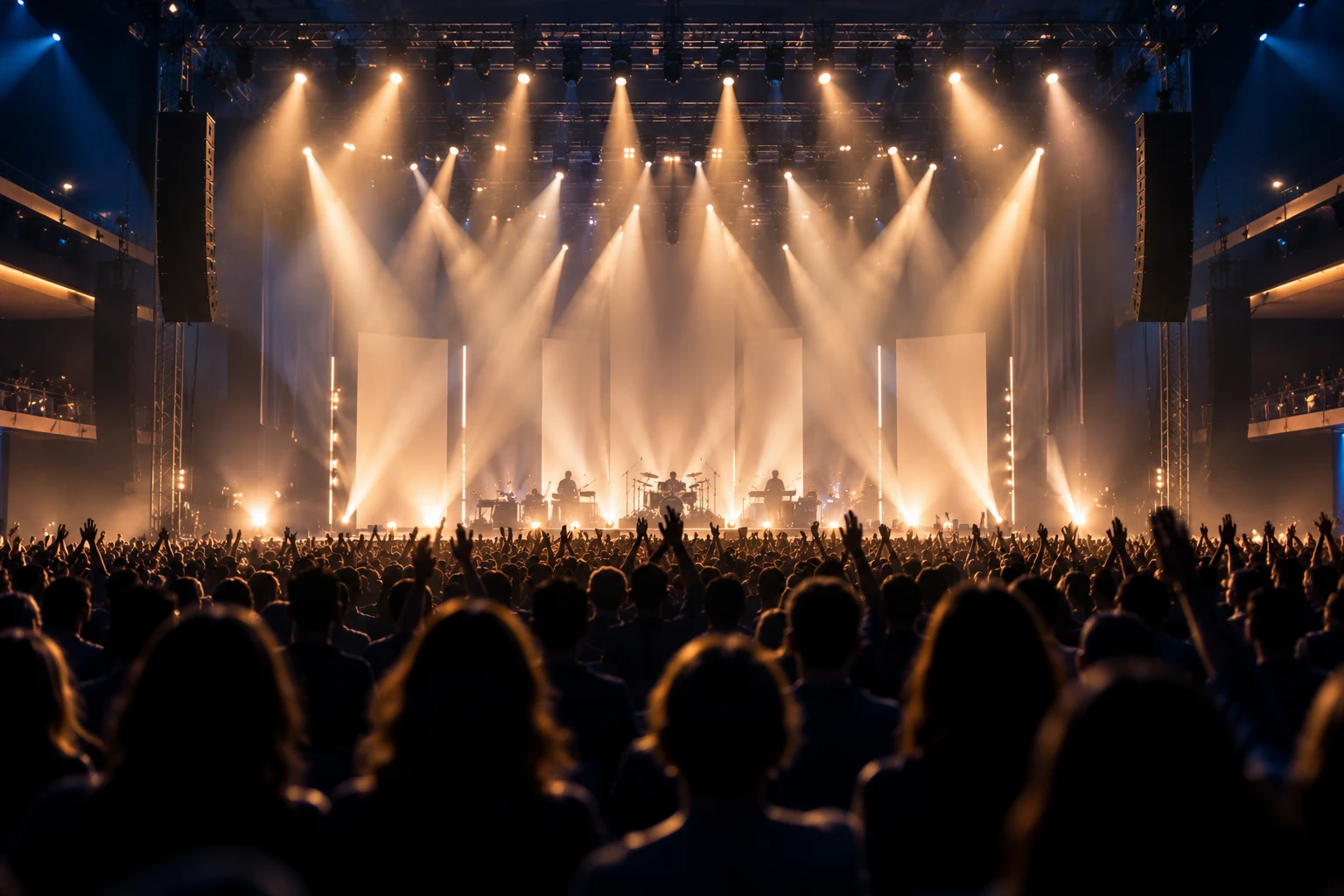
Live concerts and cultural nights
Artist liaison and hospitality
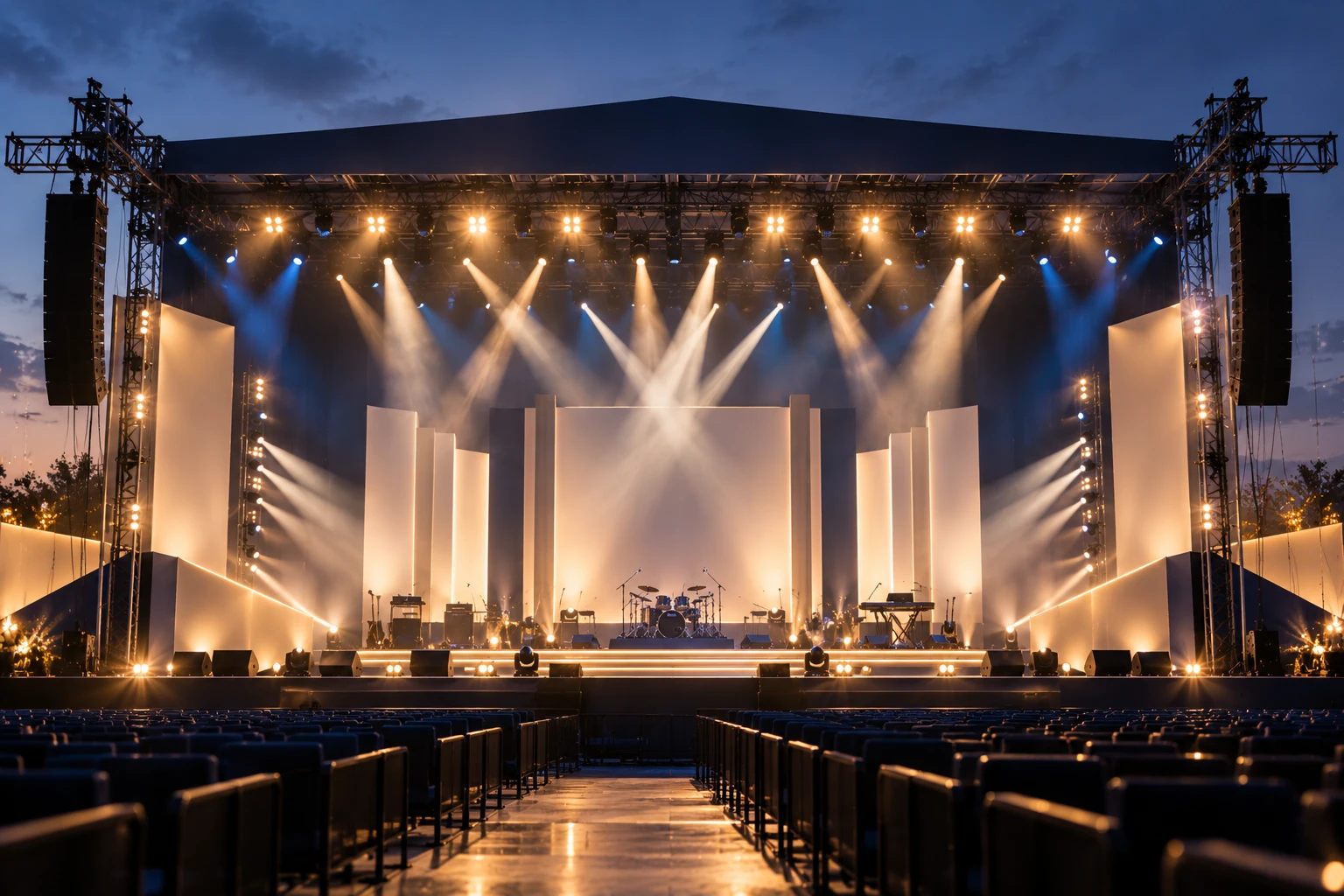
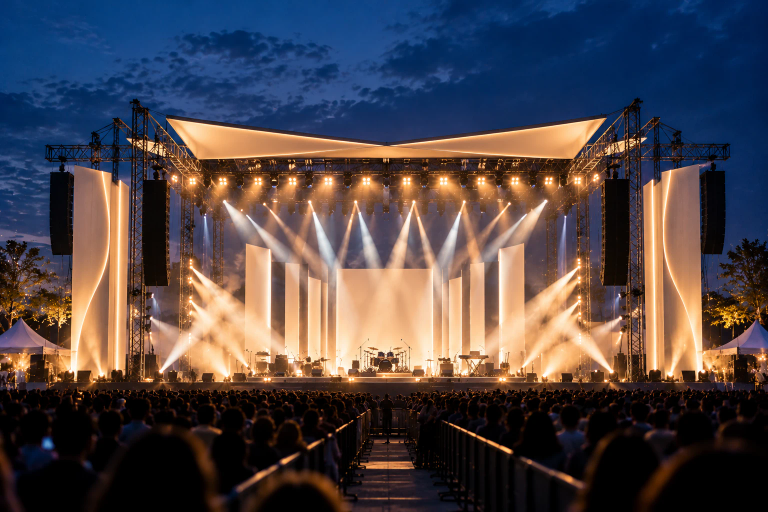
Stage, sound and lighting design
Ticketing and crowd management

The process
How we deliver it
01
The bill
Artists, set times and rider confirmed; the night built back from the headline.
02
Stage and system
Stage, sound and light specified for the room, then plotted and pre-rigged.
03
Crowd and safety
Ticketing, entry and sightlines planned with the safety brief.
04
Show night
Load-in, soundcheck and doors to schedule; the show called to the encore.
From the back row
Safety and sightlines are settled before the lineup
A show is designed from the back row forward and from the exits inward. What happens on the stage is decided after those two, not before them.
Every decision at a live show is downstream of two questions: can this crowd get out, and can they see. Get those right and a mediocre lineup still produces a good night. Get them wrong and the best artist available is playing to people who are uncomfortable.
Capacity is a calculation, not an ambition
We work it from exit width, from the time it takes to clear the space, and from where the stage is genuinely visible — then we design the show to that number rather than negotiating the number towards the show.
Sightlines are drawn before the set is. A rig position that blocks a block of seats is moved at drawing stage, which costs nothing, rather than on the day, which costs the seats.
The artist advance is the real contract
The signed agreement says who is playing. The advance says whether the night works: input list, stage plot, backline, sound-check window, what has to be in the dressing room and who from the touring party needs to be met where.
We do that in writing, early, with the artist’s own production contact rather than through a booking intermediary. Almost every live-show disaster we have seen described began as an assumption in an advance nobody completed.
Sound has a boundary
Venues have limits, cities have curfews and neighbours have a right to both. We establish the actual permitted level and the actual curfew before the running order exists, because a show built to overrun is a show that will be cut off mid-song in front of everyone.
Where a limit is tight, it changes the design rather than the plan — a different rig, a different stage orientation, more control over spill — and we would rather solve it in the drawing than argue about it at the desk.
Doors are the hardest hour
Everything arrives at once: scanning, searches, a queue that formed earlier than expected, people who want the barrier. Entry lanes are staffed for the peak, the search line and the scan line are separated so one does not stall the other, and there is somebody senior enough to make a decision standing where the queue actually is.
Stage, sound, lighting and rigging come from our own production services; artist travel, accommodation and ground movement run through hospitality and logistics.
Questions
Before you enquire
Do you book the artists?
We handle the approach, the contracting and the advance, and we will tell you plainly when an artist is beyond what the room or the budget can carry rather than chasing it. What we will not do is promise an artist before an agreement exists — announcing a name you do not yet have is the fastest way to lose an audience's trust.
How is capacity decided?
By the venue, the exits and the sightlines, in that order — never by how many tickets we would like to sell. Capacity is calculated from what the space can clear safely and from where the stage can actually be seen, and a seat with no view is not capacity, it is a complaint waiting to be made.
Who handles licensing and permissions?
We prepare and track what the venue, the local authority and the performing-rights bodies require, and we tell you at the outset which of those attach to the promoter rather than to us. Sound limits and curfew are usually the two that shape the show most, and both are better known before the running order than after it.
Do you manage ticketing?
We work with a ticketing partner rather than operating a platform, and we manage the parts that touch the night itself — scanning, entry lanes, guest lists, accreditation and what happens when somebody arrives with a screenshot that will not scan. Entry is where ticketing either works or ruins the first hour.
What is the plan if the weather turns?
Decided in advance and written down, with the call points and the person who makes each call named. Wind limits for temporary structures, a hold procedure, an announcement that has already been drafted, and the threshold at which a show stops rather than pauses. Nobody should be deciding that from the side of a stage.
What happens if an artist cancels?
The contract sets what is recoverable, and the plan sets what the audience is told and how quickly. We keep the announcement, the refund route and the running order for a shortened show ready rather than assembling them under pressure. It is not a pleasant conversation to have at contracting stage, and it is a far worse one to have on the night.
Related
Also in this group
Enquire
Tell us about your event
Share the occasion, the date and roughly how many guests. We will come back to you with how we would approach it.