

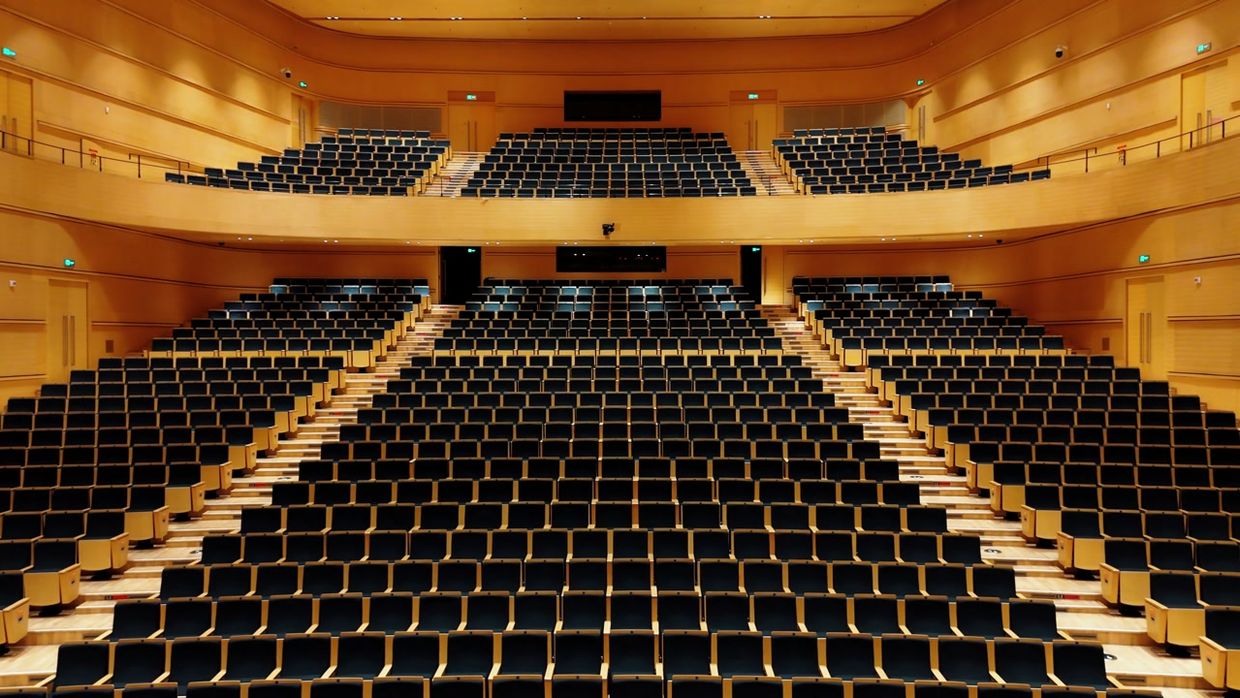
Fixed protocol, large audiences, no improvisation
Inaugurations, civic ceremonies and public programmes delivered to protocol, with the clearances handled before the day.
What this includes
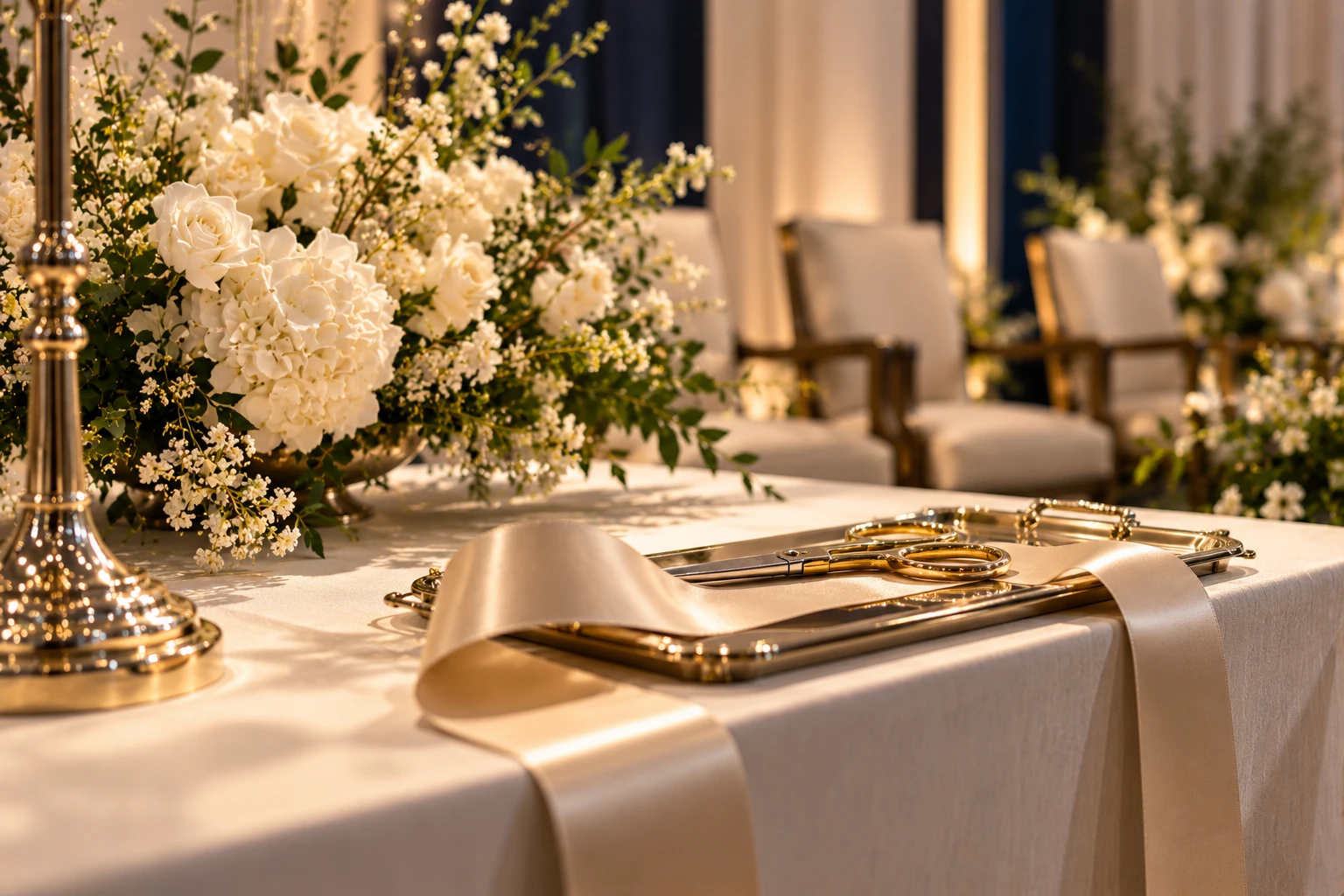
Inaugurations and foundation ceremonies
Civic and departmental programmes
Dais protocol and seating plans
Accreditation and crowd flow
The process
How we deliver it
01
Protocol and clearances
Precedence, the dais plan and every permission confirmed before design.
02
Site and safety
Venue, crowd flow and accreditation planned to the security brief.
03
Rehearsal
Arrivals, dais, the formal act and departures walked through in order.
04
The programme
The day runs as rehearsed, with one point of control for protocol.
Protocol first
Protocol is decided before design begins
A civic event has an order of precedence, a security perimeter and a set of clearances. None of them bends to a design idea, so none of them is designed around.
The difference between a civic event and a corporate one is that almost nothing about the form is yours to decide. Who sits where is set by precedence. When the programme starts is set by an office that is not yours. Whether it can happen at all is set by clearances that take as long as they take.
That is not a constraint to design around. It is the structure the event is built on, so it is settled first and everything else is fitted to it.
Clearances set the calendar
We work backwards from the approval that will take longest, not forward from the date somebody announced. Venue permission, police clearance, traffic and parking, power, temporary structure sign-off, and whatever the specific programme needs on top — each has an owner and a date, and the design is not committed until the ones that constrain it are in hand.
An event designed before its clearances is an event redesigned after them.
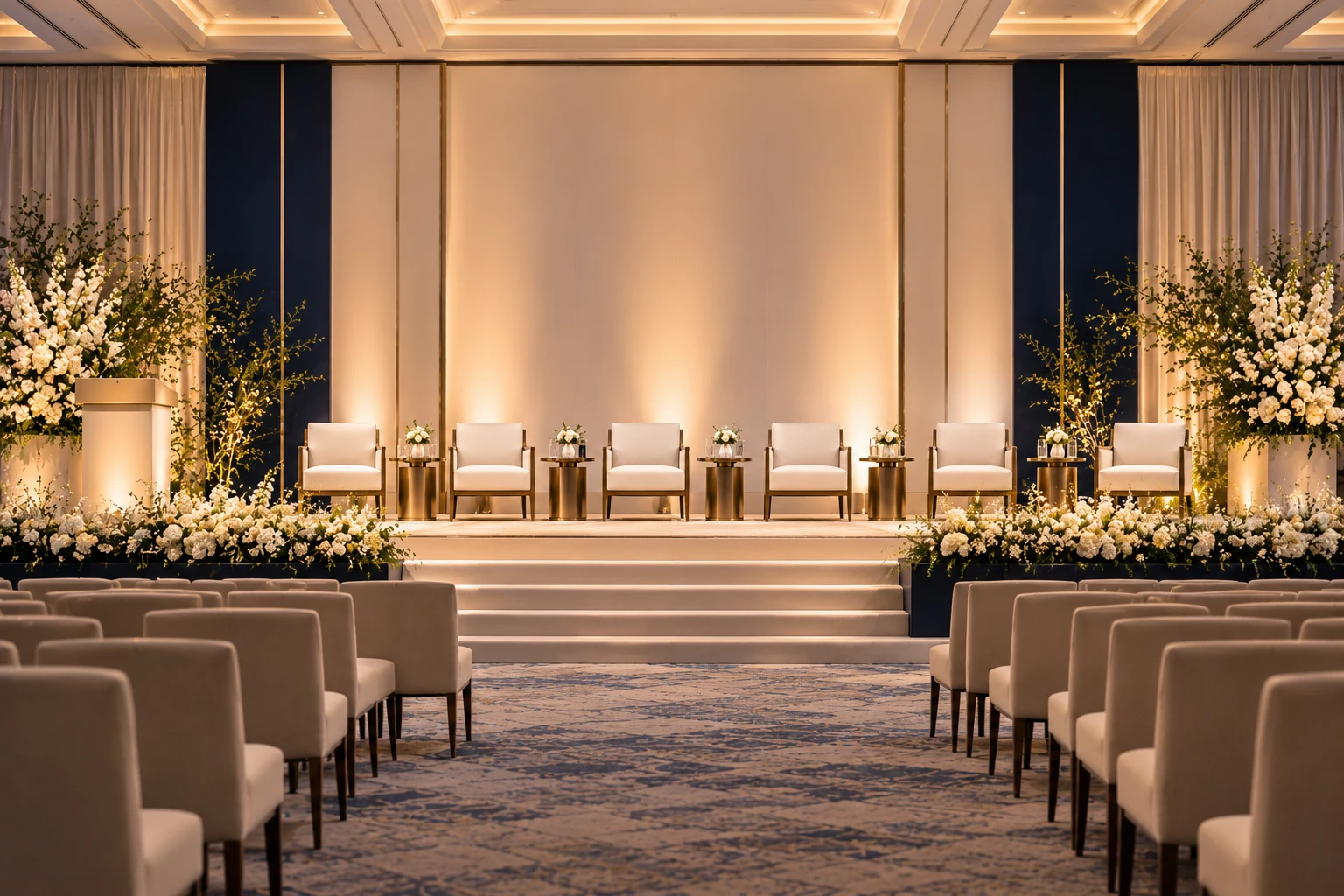
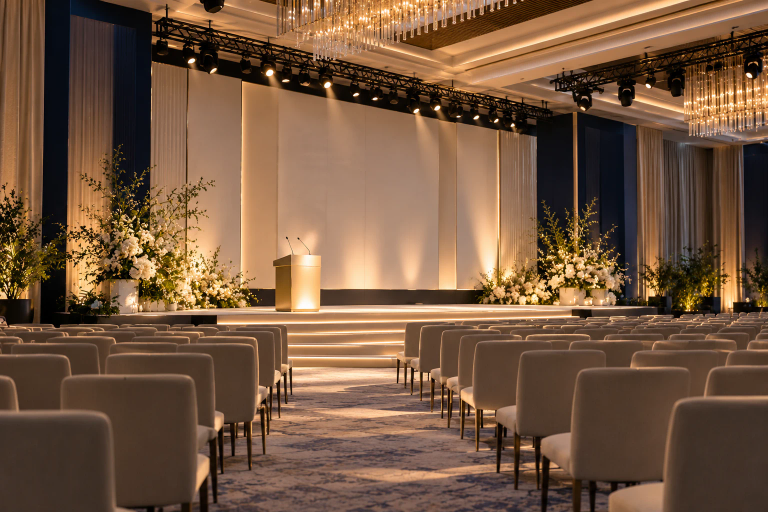
The dais is a seating chart with rules
Precedence is not a preference and it is not negotiable by the organiser. We draw the dais against the order that applies, leave positions for confirmations that have not arrived, and produce the name boards in a form that can be changed at short notice without looking as though it was.
The same applies to the citation and the running order. Both are written so that a substitution on the morning does not require anybody to improvise at a microphone.
Crowds move in one direction
Arrivals and departures never share a path. Barriers are placed to make the correct route the easy one rather than to block the wrong one, because a crowd that has to be told where to go is already a crowd that has stopped moving.
Marshals are briefed on thresholds — what to do when a block fills, when a gate is holding, when a dignitary movement cuts the floor in half — rather than on a script.
The programme runs late and that is planned for
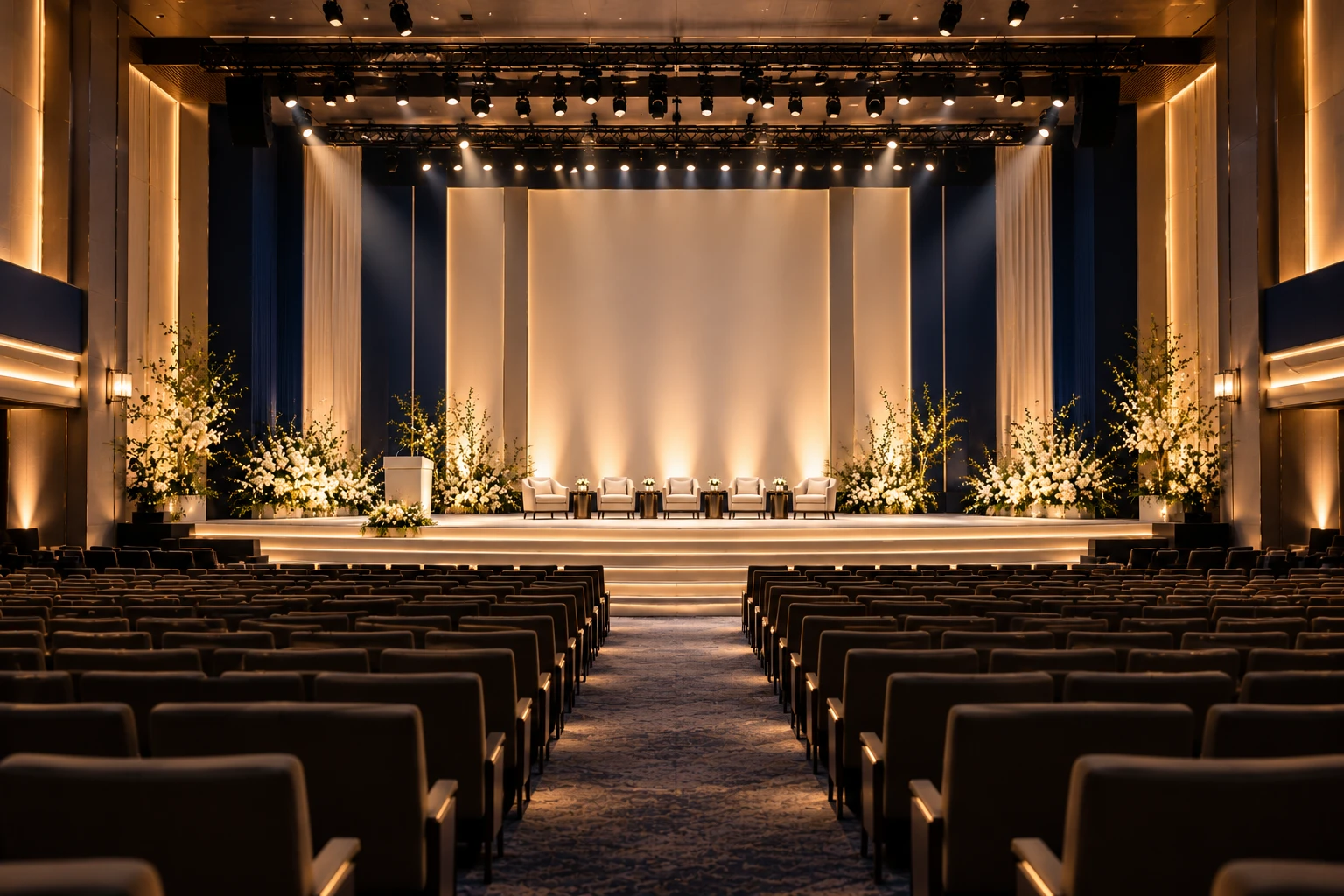
Dignitary timings move. The programme is therefore built with a compressible middle and a fixed close, so that a late start absorbs into segments that can shorten without anybody being cut off. Staging, audio and the public-address chain come from our own production services, which matters most when a programme has to be held for twenty minutes with a full audience seated.
Questions
Before you enquire
Who obtains the permissions?
We prepare and submit what a venue, a police jurisdiction or a department requires, and we track it to approval — but the applicant is usually the organising body rather than us, because the permission attaches to whoever is holding the event. We will tell you at the first meeting which approvals sit with you and cannot be delegated.
What if the chief guest changes at the last minute?
It is not an exception, it is the normal condition of a public event, so the dais is built to absorb it. Name boards are produced in a form that can be changed on site, the seating plan is drawn with precedence rather than with fixed names, and the citation is written so a substitution does not require a rewrite.
Can you handle media accreditation?
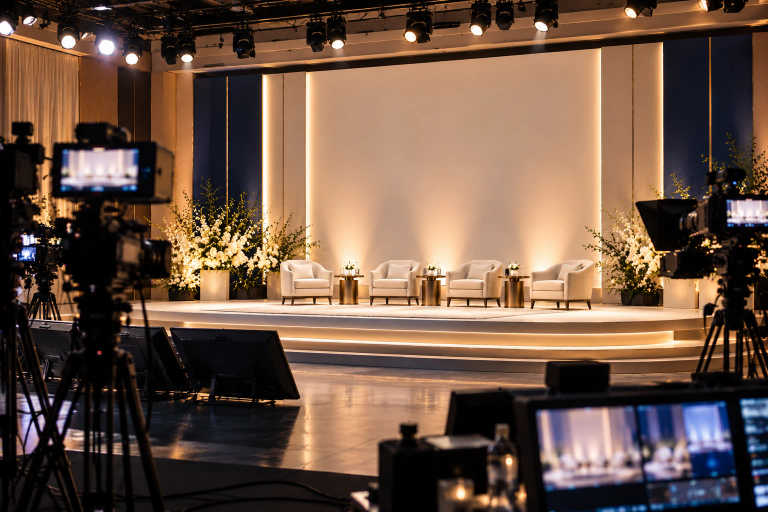
Yes — accreditation, a defined media position with power and a clean line of sight, and an escort for anyone who needs to move during the programme. Getting the position right matters more than the count: a press pen with a blocked sightline produces a room full of photographers standing where they should not be.
How do you plan for a crowd nobody can predict?
By planning the flow rather than the number. Entry and exit are designed so that arrivals and departures never share a path, the seating is built in blocks that can be opened or left closed, and the marshals are briefed on what to do at each threshold. A crowd that turns up larger than expected is then a decision, not an emergency.
Can you work within a departmental procurement process?
Yes. Procurement usually sets the timeline more tightly than the event does, so we plan backwards from the approval dates rather than the event date, and we keep the documentation in the form the process needs rather than reformatting it later. Tell us the process at the start, not once it has begun.
How do you handle accessibility for public attendees?
Step-free access, seating that does not require anyone to be carried, a route to facilities that does not cross the ceremonial path, and shade or shelter for a queue that may wait. On a public programme the audience is not self-selecting, so the provision cannot be either.
Related
Also in this group
Enquire
Tell us about your event
Share the occasion, the date and roughly how many guests. We will come back to you with how we would approach it.