

Small rooms, read from a metre away
Milestone birthdays, anniversaries, engagements and naming ceremonies, planned so every detail holds up at close range.
What this includes
Milestone birthdays and anniversaries
Engagements and proposals
Naming ceremonies and housewarmings
Intimate dining and tablescapes
The process
How we deliver it
01
The occasion
Who the evening is for, how it should feel, and a budget we can hold.
02
The setting
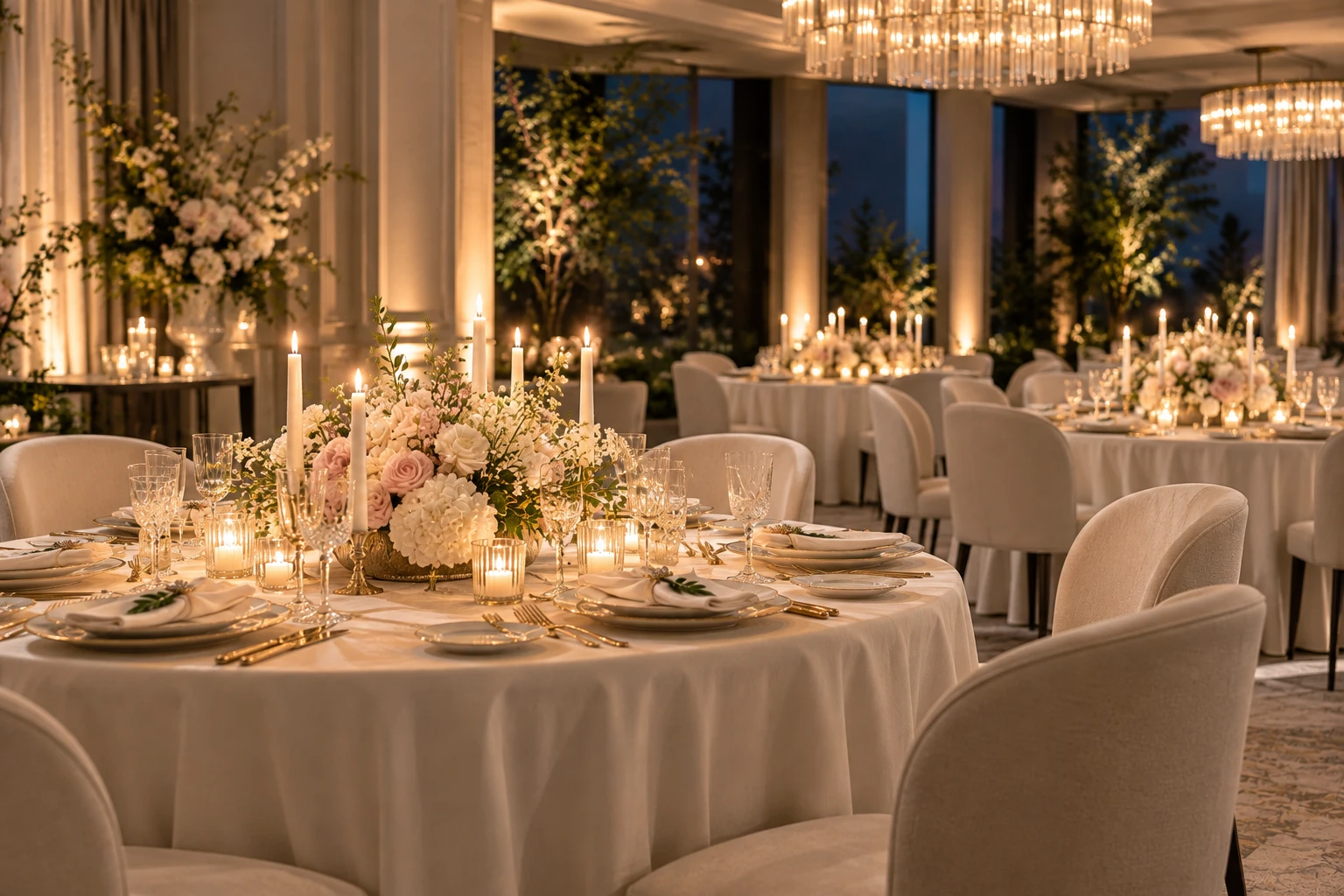
Tables, florals and light designed for guests sitting close.
03
The details
Menu, music and running order arranged and rehearsed in advance.
04
The evening
We run it quietly in the background; you stay with your guests.
Close quarters
A small room has less margin, not more
A private celebration is not a simpler version of a large one. Everyone can see everything, nobody is anonymous, and the person hosting is also a guest.
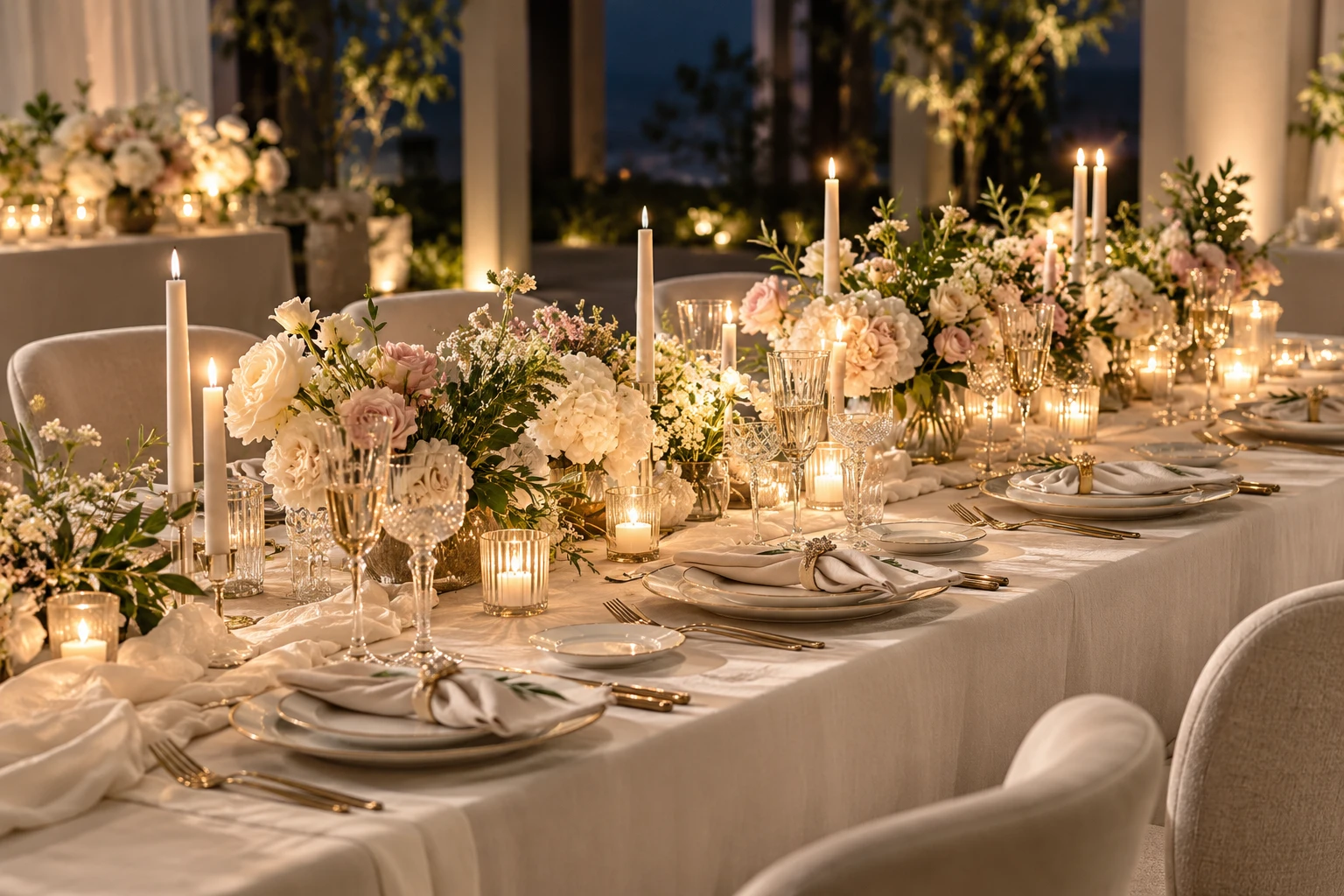
At scale, distance forgives. A seam in a drape, a cable taped to a floor, a stem that has gone over an hour early — none of that survives a room where guests are close enough to read the printing on a place card. So the finish standard on a private celebration is higher than on a large event, not lower, and that is the whole difference in how we approach one.
The guest list is the design brief
At this size a guest list is not a number, it is a set of relationships. Who opens the evening, who speaks and who would rather not be asked, which two people should sit on opposite sides of the room. We take that before we take a colour preference, because it decides the shape of the evening and the colour does not.
It is also the part a venue will never ask you about.
Nobody in the family runs the evening
The host of a private celebration is usually the person it is about, or the person closest to them. Either way they should not be the one checking whether the cake has arrived, or fielding a call about parking, or deciding on the spot whether to hold the speeches for a guest stuck in traffic.
Those decisions are real and somebody has to make them. That somebody is us, against what you told us mattered, and you hear about it afterwards rather than during.
What we bring, and what we leave alone
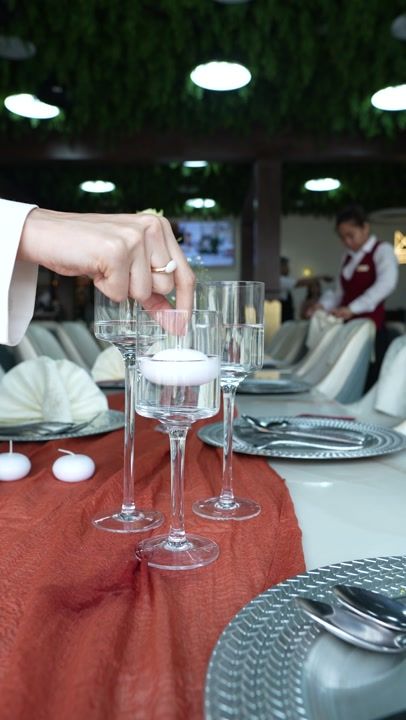
Smaller rooms tempt over-decoration, because the budget that would have dressed a ballroom is available for a dining room. We tend to spend it on fewer, better things — the table, the light, the flowers you will actually look at — and on the parts nobody photographs: where coats go, how the room is lit once the sun drops, whether there is somewhere quiet for an older guest to sit.
Where a celebration needs staging, lighting or fabrication beyond what a room can carry, it comes from our own production services rather than a subcontract we would have to chase.
The morning after belongs to you
A home or a private room has to go back to being a home or a private room. Strike is scheduled, staffed and quiet, and it does not happen while your last guests are still finding their shoes.
Questions
Before you enquire
Is our celebration too small for you?
Almost certainly not. The work changes shape at a smaller scale rather than disappearing — there is less to build and far more to get exactly right, because guests are seated close enough to touch everything you put in front of them. Tell us the occasion and who is coming and we will tell you honestly whether we are the right people for it.
Can you work in our home rather than a venue?
Yes, and homes are often the better room. They come with real constraints — the power available, what fits through a door, where a kitchen can actually plate from — so we survey before we design rather than after. A home also has to be returned to the family the next morning, and that is planned as carefully as the setup.
We already have the venue. Do you still design?
Yes. A room you have already chosen is a brief, not a limitation, and most of our work on a private celebration starts that way. We design to what the room does well and work around what it does not, which is a more useful conversation than starting from a blank floor plan.
Do you handle food and drink?
We contract and manage the caterer rather than cooking ourselves, and we hold them to service times that fit the evening rather than the kitchen. At close range the pacing of food is a large part of how an evening feels, so it is planned into the schedule rather than left to the venue to decide on the night.
How much do you need to know about the family?
More than feels necessary at first. Who should not be seated together, which elder opens the evening, which relative will quietly take over if nobody gives them a role — these decide a private celebration far more than the colour palette does. We ask early, we write it down, and it does not leave us.
It is a surprise. Can you work around that?
Often, yes. It changes who we can speak to, which usually means a longer planning conversation with one person instead of a short one with several, and it puts real constraints on delivery and setup timings. Tell us who does not know and we will plan the day so they stay unaware of it.
Related
Also in this group
Enquire
Tell us about your event
Share the occasion, the date and roughly how many guests. We will come back to you with how we would approach it.