


A new committee every year, one standard
Multi-day college festivals and cultural programmes run to a production standard that does not reset when the students do.
What this includes
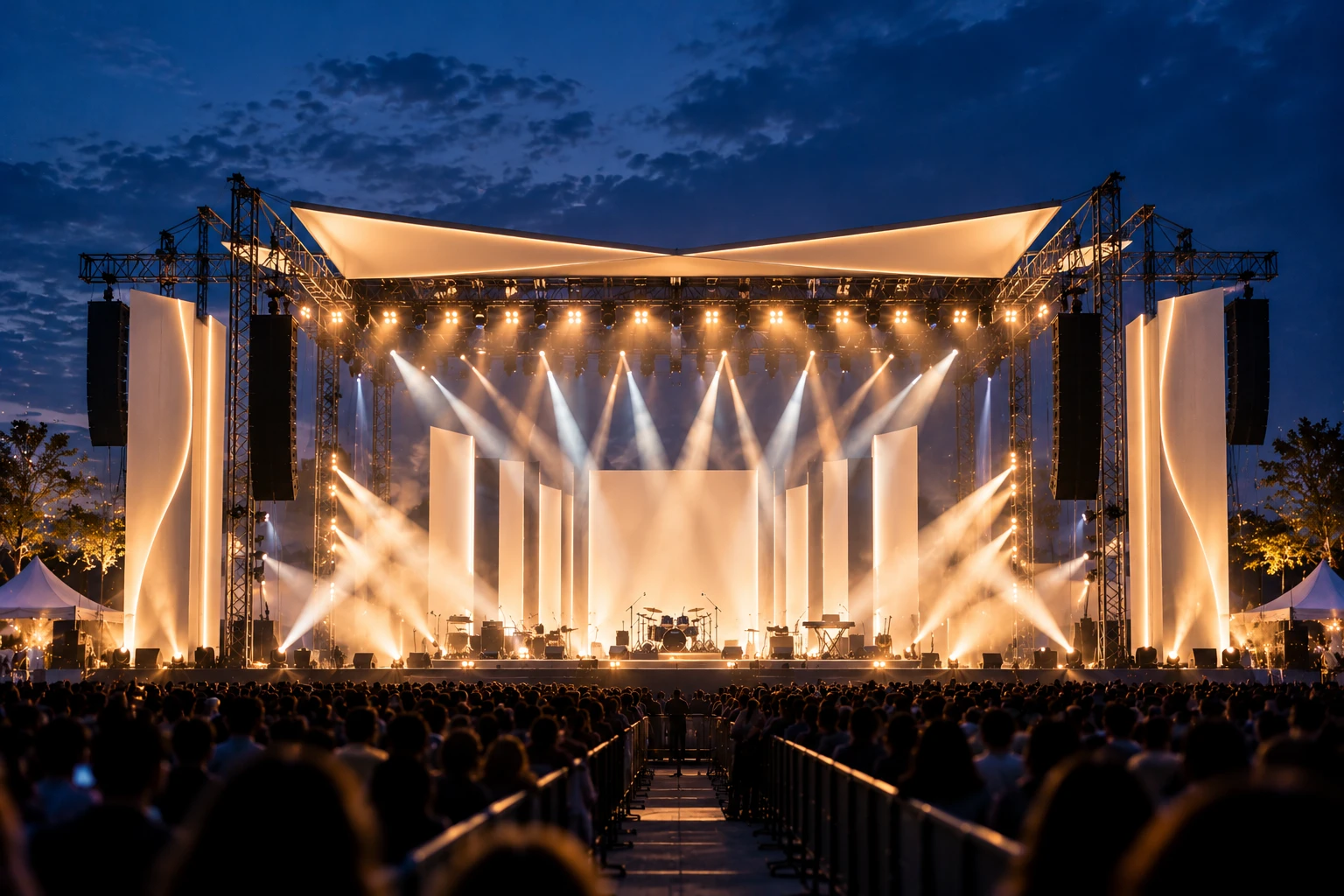
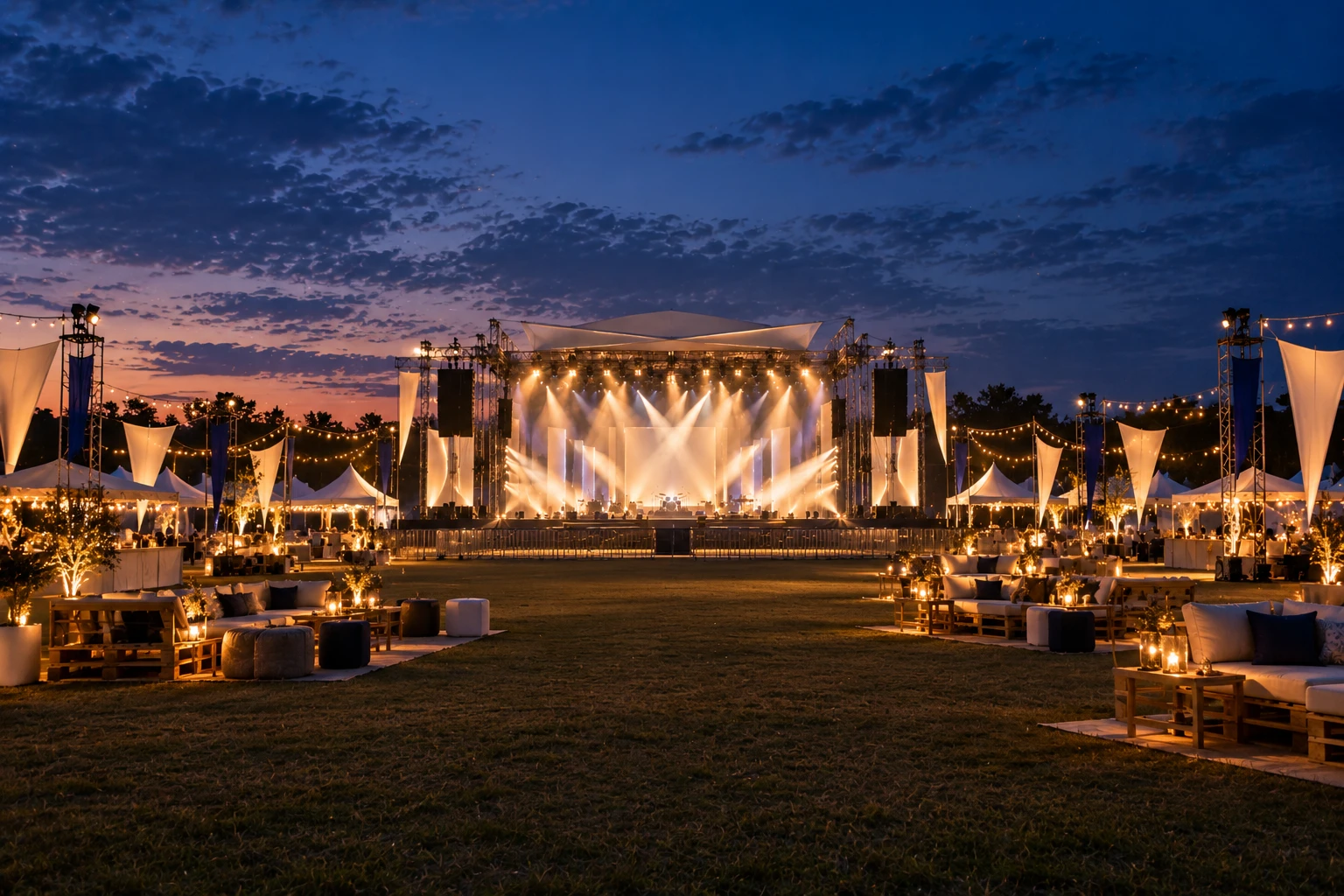
Multi-day festival production
Stage and competition scheduling
Artist and celebrity booking
Sponsor deliverables and branding

The process
How we deliver it
01
The plan
Schedule, stages and budget fixed with the committee for every day.
02
Stages and scheduling
Competitions and headline acts slotted so stages turn over cleanly.
03
Artists and sponsors
Bookings, hospitality and sponsor deliverables contracted and tracked.
04
Across the days
Each day called and reset overnight; the last opens as sharp as the first.
Year on year
The committee changes every year, the standard should not
A fest is run by students who will graduate. We are the part that remembers what happened last year, and what it cost.
Every other client we work with accumulates experience. A college festival loses it annually — the committee that learned how to run the thing graduates, and the next one inherits a folder, a WhatsApp group and a set of assumptions nobody wrote down.
The production standard should not reset with them. That is the job.
We carry what the committee cannot
We hold the things that only make sense across years: which vendors delivered and which did not, what the power actually drew, where the queue formed last time and why, which sponsor asked for something that was never agreed.
A committee gets one attempt. We have the version of the site plan that already has last year’s mistakes marked on it, and that is worth more to a fest than any single creative idea we could bring to it.
A student budget is a constraint, not an excuse
Campus budgets are genuinely tight and often fixed by an authority nobody in the room can appeal to. That is a design problem, and it is a legitimate one.
What it is not is a reason to quietly reduce quality until it becomes visible — a thinner rig, a cheaper crew, a stage that looks fine empty. We would rather show a committee the real cost of the three largest items and let them cut a whole element than spread the shortfall invisibly across everything.
Competitions are a scheduling problem
The cultural half of a fest is dozens of events with overlapping participants, shared stages and judges who are only free in a window. It is the part most likely to collapse, and it collapses quietly — a heat runs long, a stage turnaround is missed, and by evening the whole programme is an hour adrift.
So it is scheduled like a production, with turnaround times, holding areas and a named person per stage. Participants are told when to arrive, not just when they perform.
Sponsors have deliverables, not just logos
Branding positions, stage mentions, sampling, photography, a report afterwards. Each has a deadline and an owner, tracked like any other part of the build, because sponsorship is what funds the fest and a sponsor is retained or lost on whether what was promised actually appeared.
Stage, sound, lighting and structures are built by our own production services.
We hand it back documented
At the end the committee gets what actually happened rather than what was planned: the real run of show, the vendor list with figures, the sponsor deliverables marked off, and a plain account of what went wrong. The next committee starts from that.
Questions
Before you enquire
How early should a committee approach you?
Before the dates are announced, not after. The two things that get fixed earliest — the dates and the headline act — are the two that constrain everything else, and a committee that has already published both has narrowed its own options before the planning starts.
Can you work to a fixed college budget?
Yes, and a fixed number is easier to work with than an open one. What we will not do is agree to a figure and then discover the scope will not fit inside it. We price the fest you have described, show you what the largest items actually cost, and let the committee decide what to drop — rather than quietly thinning the production until it shows.
Do you book the headline act?
We handle the approach, the contracting and the advance, the same way we do for a [concert](/services/concerts-and-entertainment/). We will also tell a committee when a name is out of reach, which is not what anyone wants to hear in the first meeting and is considerably better than hearing it in the last one.
Who is responsible for crowd safety on campus?
The institution is, and we work to that rather than around it. Entry control, exit capacity, the plan for a crowd larger than ticketed, and the line between what a student volunteer should handle and what needs professional security — all of it is agreed with the college before it is agreed with anyone else.
What do sponsors actually receive?
Whatever was written down, which is why we want it written down early. Branding positions, stage mentions, sampling rights, photography and a post-event report are deliverables with costs and deadlines attached. A sponsor whose logo went up late is a sponsor the next committee will not have.
What do we get at the end?
A handover the next committee can use: the run of show as it actually ran, the vendor list with what each was paid, the sponsor deliverables and whether they were met, the site plan, and an honest note on what went wrong. That document is the main reason a fest improves year on year instead of restarting.
Related
Also in this group

Enquire
Tell us about your event
Share the occasion, the date and roughly how many guests. We will come back to you with how we would approach it.