

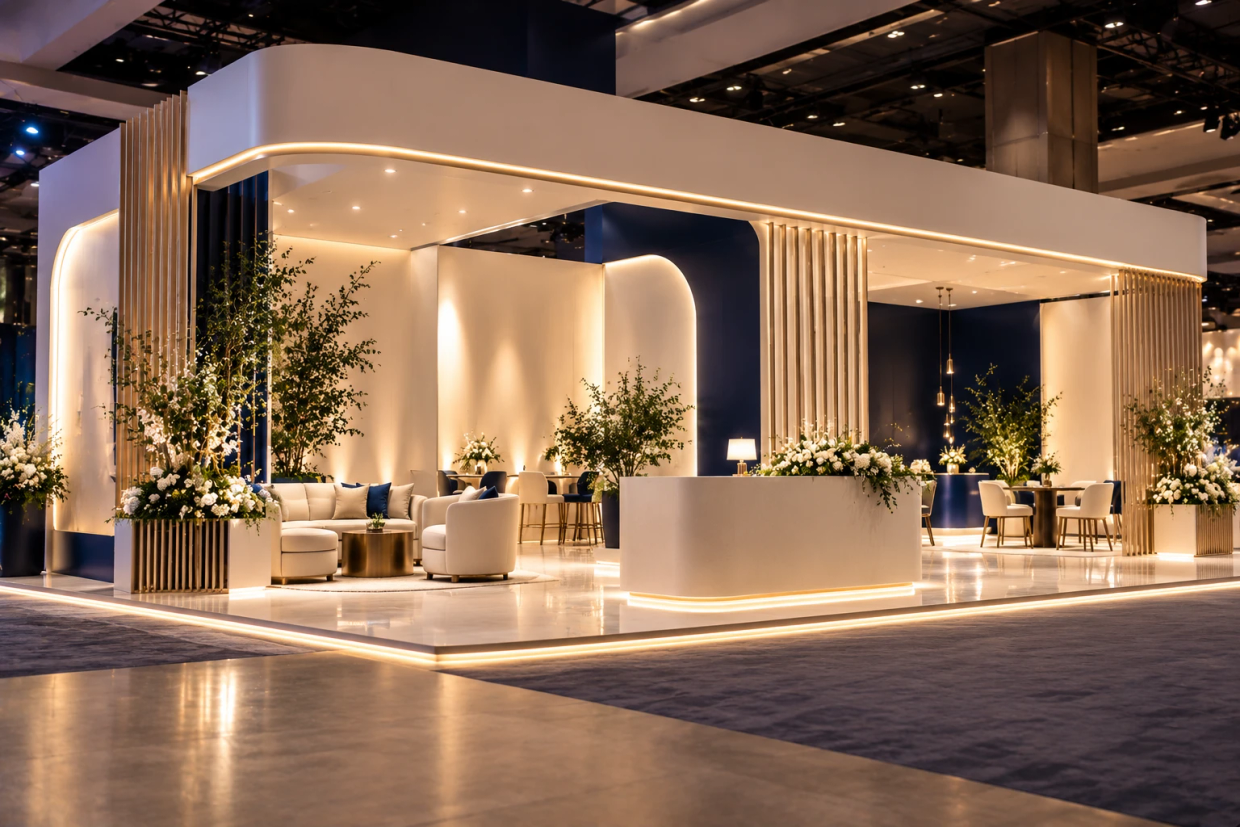
Built to be walked through
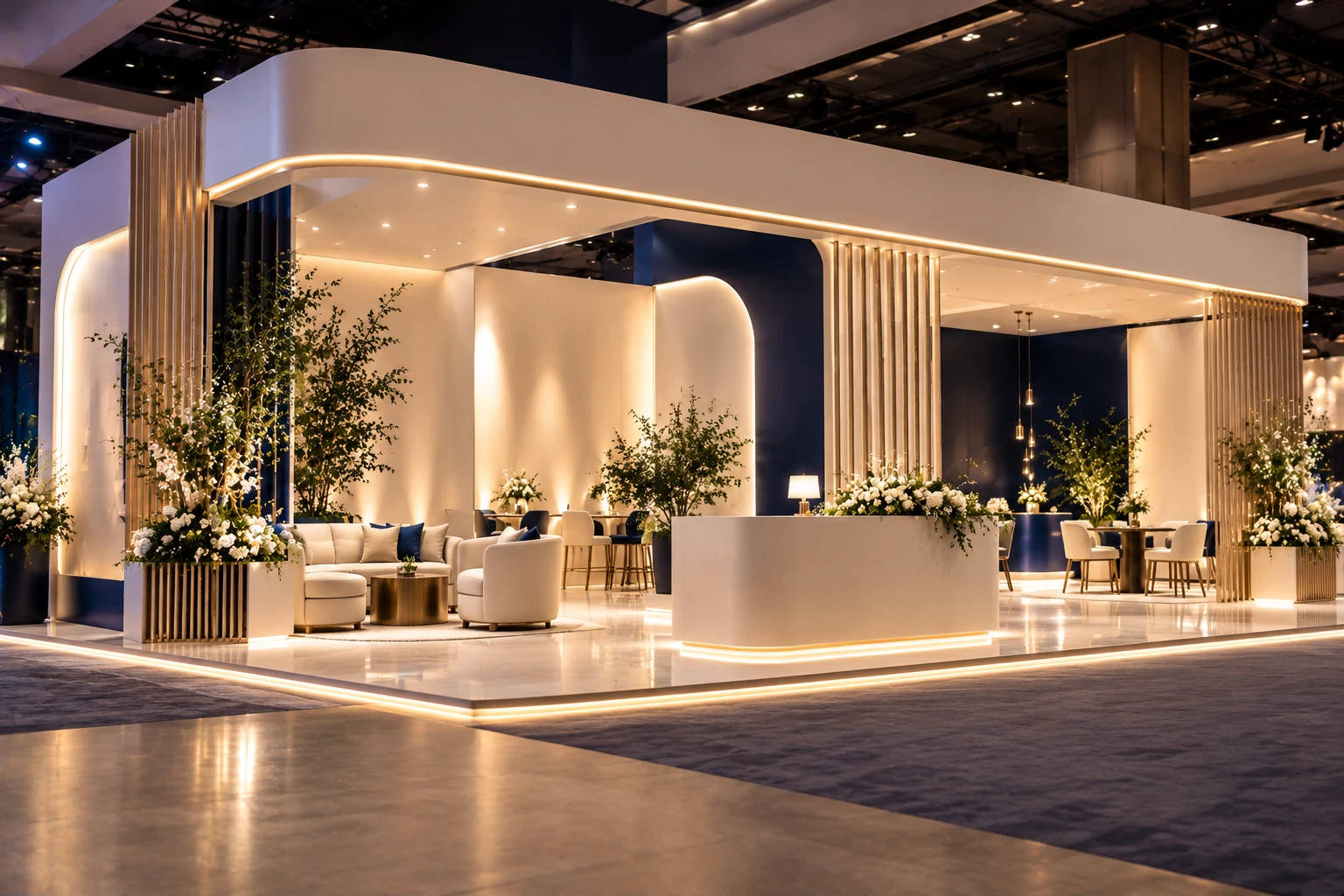
Retail activations, roadshows and exhibition stands designed as brand environments that still photograph well at the close.
What this includes
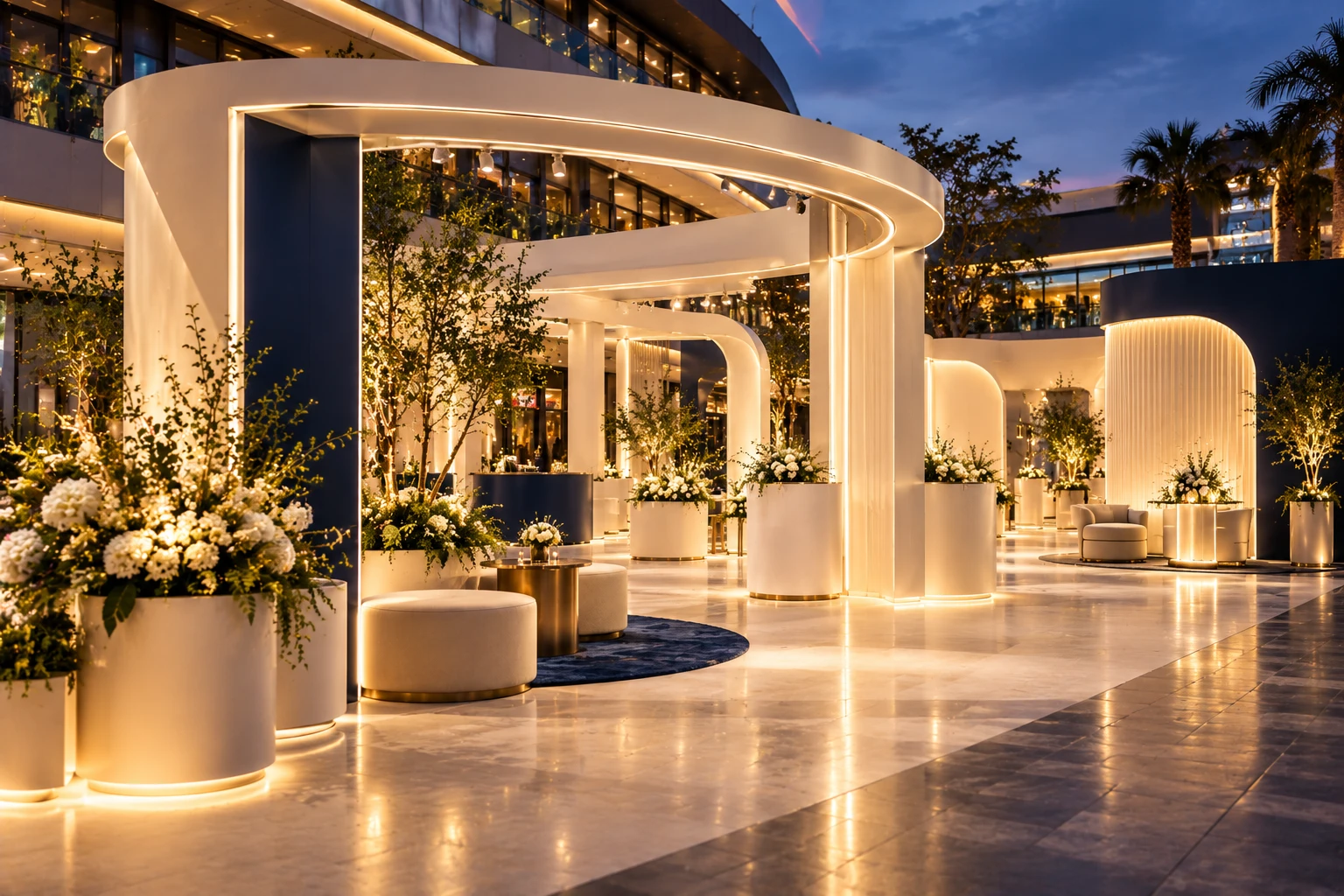
Retail and mall activations
Roadshows and mobile units
Exhibition and trade-fair stands
Fabrication and installation
The process
How we deliver it
01
The idea
Footfall, dwell, capture: the experience is designed around what it must do.
02
Fabrication
Built to take a full day of handling without looking worn by noon.
03
Install
Load-in to the venue's access windows; dressed and checked before opening.
04
On site
Staffed through the day, then struck cleanly without leaving a mark.
Built to last the day
It has to look new at the end of the day
A stand is photographed at the first hour and lived in until the last. Most of the work is making sure those two look like the same build.
An activation is the only thing we build that strangers are invited to touch. A wedding stage is looked at, a conference set is sat in front of, but a brand environment is walked through, leaned on, queued in and photographed by people who did not plan to be there.
That changes what the design has to survive, and almost everything we do differently here follows from it.
Designed for hour ten, not for the render
A render is generated at the moment of completion, under perfect light, with nobody in it. The build then spends its real life full of people, under whatever the venue’s lighting actually is, with fingerprints on it.
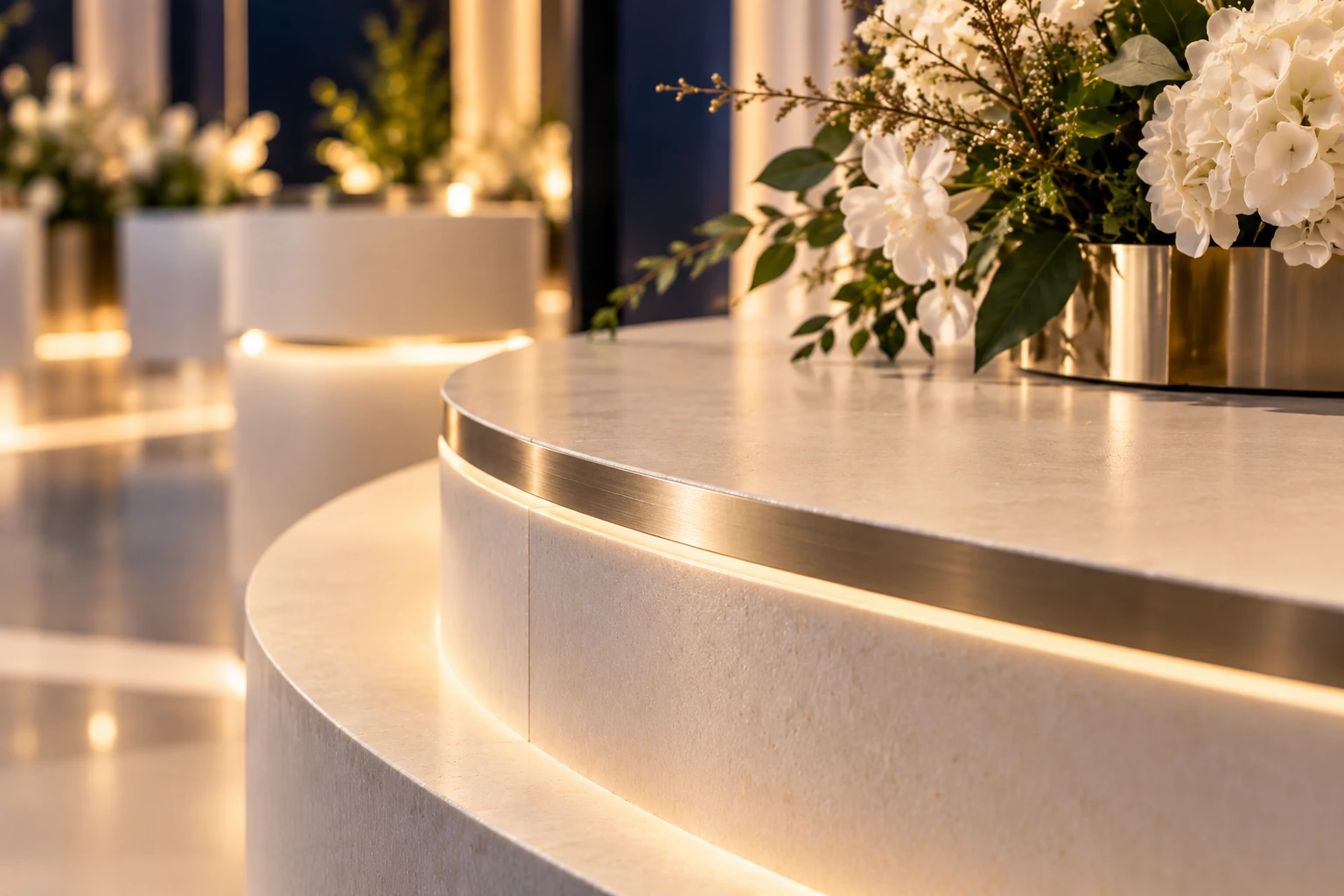
So we specify for the end of the day. Surfaces that show wear are chosen to be wiped down rather than treated carefully. Edges that will be knocked are detailed to take it. The parts that get handled most are the parts made to be replaced.
The venue owns the rules
Malls, exhibition halls and public spaces each set their own limits — height, rigging, power draw, noise, build and dismantle windows, what may touch the floor. These are not guidelines and they are rarely flexible.
We read them before we draw, which sounds obvious and is routinely skipped. A stand designed to a height the venue will not permit is not a negotiation; it is a rebuild at someone’s cost, discovered in the worst possible week.
Staff are part of the build
The most carefully made environment in the world is undone by somebody standing in it who does not know the product or is not sure whether they are allowed to open a door.
Promoters and hosts are briefed on the brand, the product and the escalation path, and there is a supervisor on site whose job is the floor rather than the paperwork. Where an activation runs alongside a larger programme, that team works to the same run of show as everyone else.
Dismantle is planned with the build
Strike windows at commercial venues are short, usually overnight, and always penalised when overrun. The dismantle sequence is drawn at the same time as the build sequence, and the crew who put it up are the crew who take it down.
Fabrication, staging, lighting and rigging are produced by our own production services. Where an activation travels as a roadshow with a live element, both halves are run by one team rather than two who meet at the venue.
Questions
Before you enquire
How long does fabrication take?
It follows the build, not a calendar: a modular stand that travels is a different job from a one-off structure with a custom finish, and the approvals a venue requires often take longer than the making. Tell us the dates and the venue and we will tell you what is achievable and where the risk actually sits.
Can the same build travel between cities?
Yes, if it is designed to from the start — panel sizes that fit a vehicle, finishes that survive handling, and a build sequence a local crew can follow from a drawing. Retrofitting a one-off stand for travel usually costs more than designing for it would have, so it is a decision we ask for early.
Who manages permission at a mall or exhibition venue?
We do, and it is a larger part of the work than clients expect. Venues set build windows, height limits, rigging rules, noise restrictions and what may be attached to their floor or walls. We design against those rules rather than submitting a design and negotiating afterwards.
Do you provide staff for the activation?
Yes, and we brief and manage them rather than handing over a headcount. A brand environment is largely delivered by whoever is standing in it, so they get the product knowledge, the escalation path and a supervisor on site — not a script and a t-shirt.
What happens when the build takes a beating?
It is anticipated. High-contact surfaces are specified to be cleaned rather than protected, spares for the parts that will fail are made with the build, and somebody on site has the tools to fix them between peaks. A build that can only be repaired by the fabricator is a build that stays broken.
Can you work to our brand guidelines?
Yes, and we would rather have the strict version than a summary. Colour references, minimum sizes, approved typefaces and what is not permitted — the constraints make the design faster, not slower. Where a guideline and a venue rule genuinely conflict, we bring you the conflict rather than quietly resolving it.
Related
Also in this group
Related reading
From the journal
Organising an expo when you are not a large company
What a smaller business needs to get right at a trade expo — position, stand design, staffing, venue rules, and the follow-up that decides whether it paid.
Enquire
Tell us about your event
Share the occasion, the date and roughly how many guests. We will come back to you with how we would approach it.