

The run of show comes before the set
Conferences, dealer meets, offsites and award nights, built so delegates only ever notice the logistics working.
What this includes
Conferences and leadership summits
Dealer and channel meets
Annual days and award nights
Product launches
Delegate registration and logistics
The process
How we deliver it
01
Brief and run of show
Objectives agreed, then the minute-by-minute run of show, before any build.
02
Delegate logistics
Registration, travel, rooming and movement planned as one system.
03
Build and rehearse
Set and content built to the run of show; speakers rehearsed against it.
04
Show call
A stage manager calls cues, transitions and timing to the minute.
How we run it
Delegates notice logistics only when they fail
Nobody leaves a conference talking about the registration desk unless it went wrong. So we build the run of show before we build anything that will be photographed.
A conference is judged on whether the day worked. The set, the lighting and the film are what people remember afterwards, but they are not what decides whether the event was any good — the decision is made in the first twenty minutes, at a desk, by someone who has travelled and wants coffee.
The brief is a business outcome, not an event
The most expensive corporate events we see go wrong at the brief. Someone asks for an annual day, gets an annual day, and it turns out the real purpose was retention in a year when people have been leaving. The format was never the problem; nobody stated the outcome, so nobody designed against it.
We ask what has to be true when delegates walk out, and we keep asking until the answer is something you could measure. Everything after that — the agenda, the room, the running order, whether there is a stage at all — is a consequence of it.
Registration is the first impression
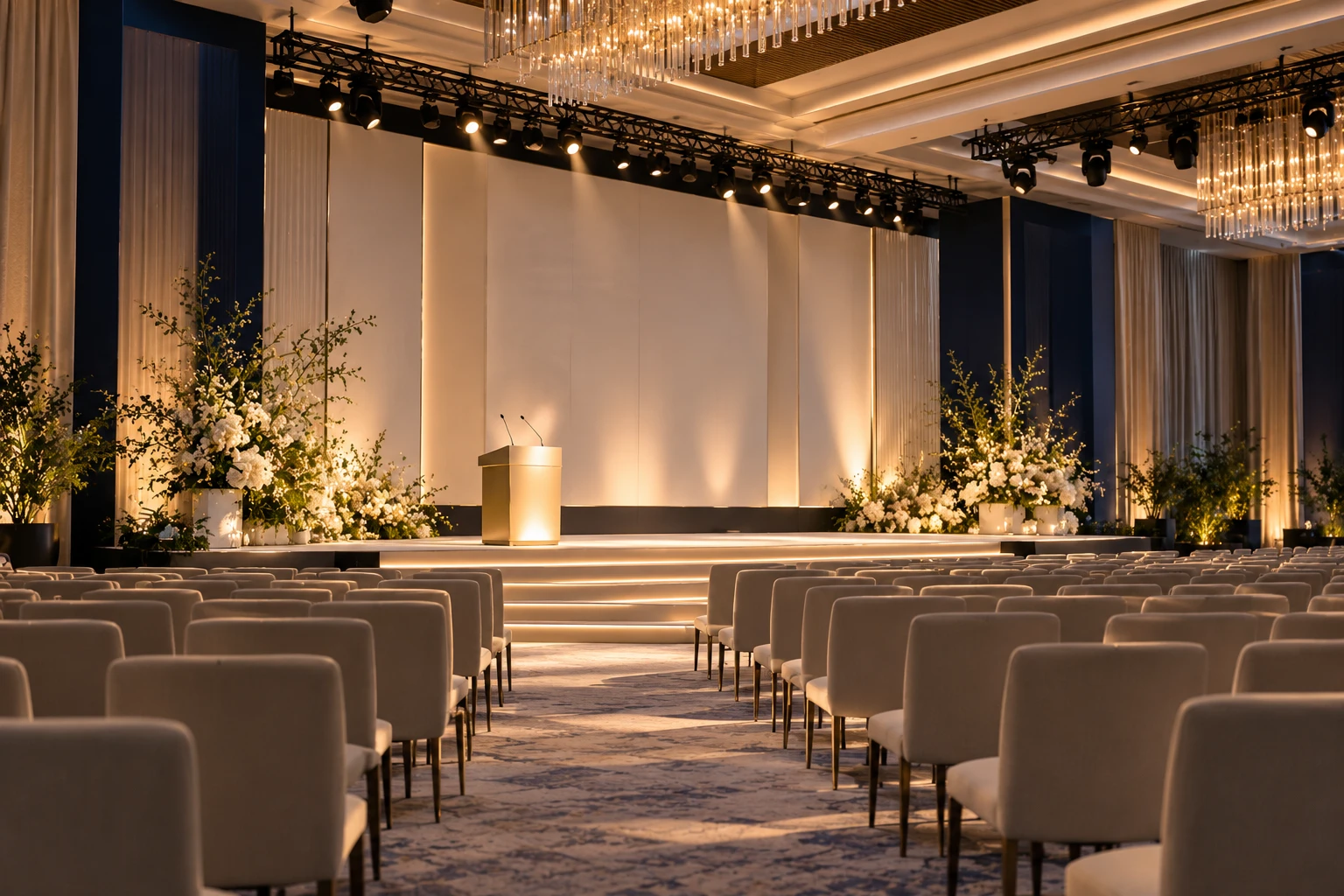
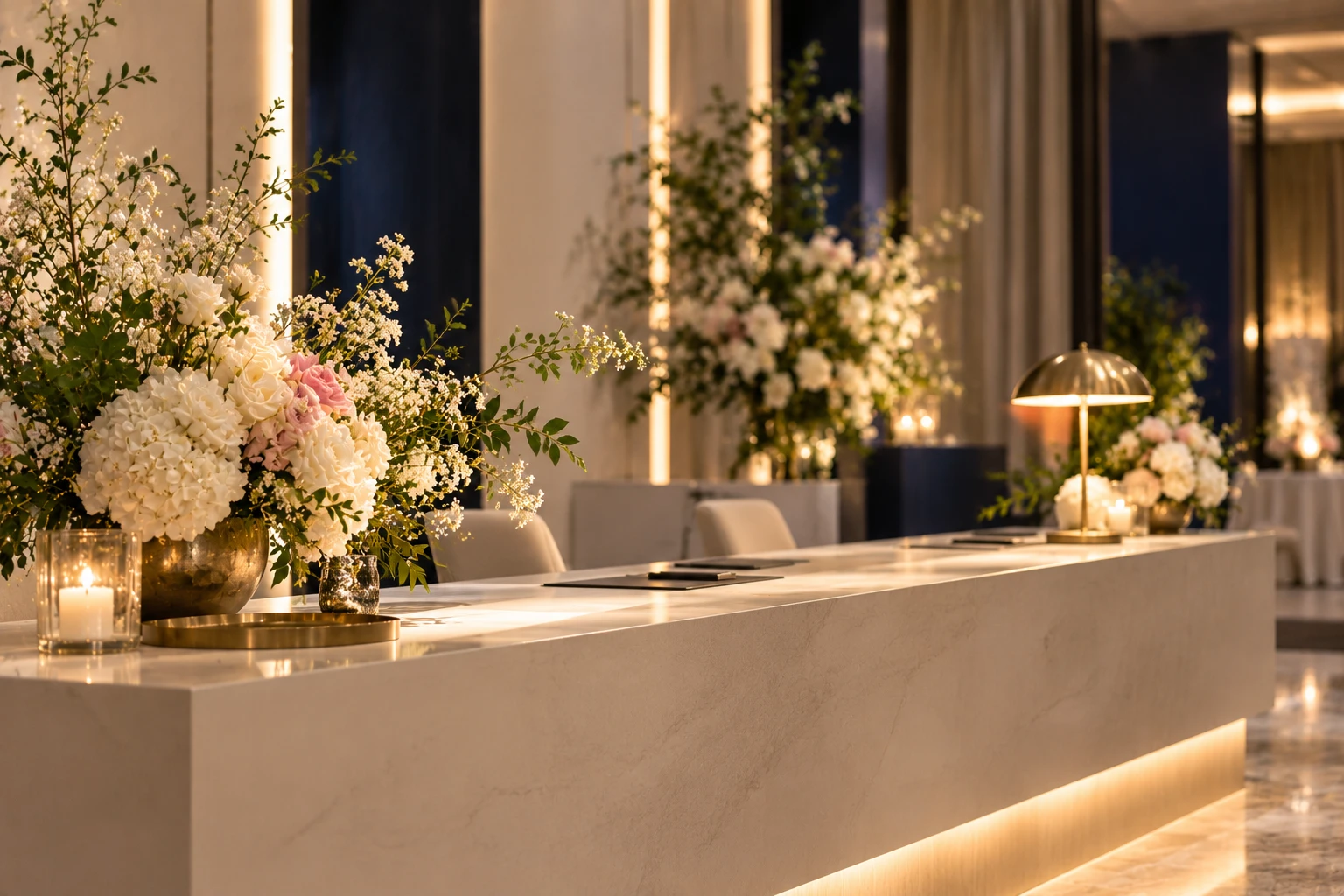
The desk sets the tone for the whole day and it is almost always under-resourced. We staff it for the peak, not the average, which usually means it looks over-staffed for an hour either side of the rush. That is the correct amount of over-staffing.
Badges are pre-printed and pre-sorted. Late additions have a path that does not involve the main queue. Somebody senior enough to make a decision is standing in the foyer rather than backstage.
Rehearsal is not optional
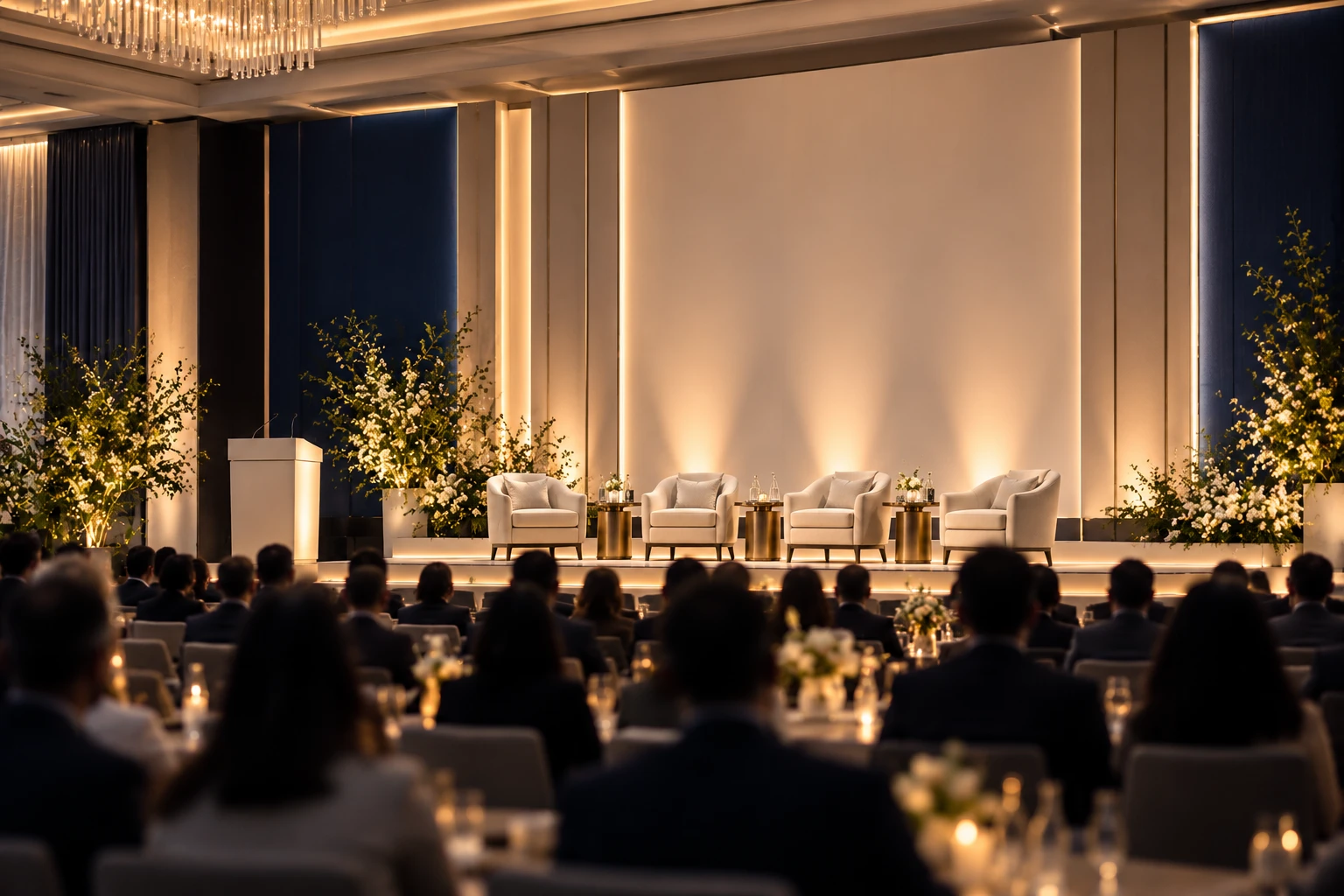
Every speaker walks the stage. Every deck is opened on the actual machine, on the actual screen, in the actual room. Every cue is called once before it is called for real.
This is the single highest-return hour in a corporate event and it is the first thing a client asks to cut when the schedule tightens. We hold it.
The room between the sessions
Networking, breakouts and food are where most of the value of a conference actually sits, and they are usually planned last. We schedule them first — because a break that is too short to get a coffee and back is a break that damages the session after it, and no amount of stage production compensates for that.
Stage, screens, lighting and audio are built by our own production services, so a change to the set on a rehearsal morning is a conversation rather than a variation order.
Questions
Before you enquire
What do you need from us to start?
The business reason for the event, before anything else. A dealer meet that exists to secure commitments for next season is a different event from one that exists to announce a product, even if both are a day in a ballroom with the same agenda on paper. Tell us what has to be true when delegates leave and the format follows from that.
Can you work with our internal AV or IT team?
Yes, and on a corporate event we usually are. Your team knows the platform, the security rules and what has failed before; we bring the room, the schedule and the people to run it. What we ask for is one technical rehearsal where both sides are in the room, because an integration that works in theory has never yet survived a first live cue.
Do you handle delegate registration and travel?
Yes. Registration, badging, arrivals and accommodation run through [hospitality and logistics](/services/hospitality-and-logistics/), which is the same team rather than a supplier we brief. It matters at the desk: a delegate whose travel we booked is already on the list we are checking them against.
Can you run the same event in several cities?
Yes, and a roadshow is mostly a documentation problem rather than a creative one. The first city is designed; every city after it is the same event rebuilt against a different floor plan, a different vendor bench and a different load-in window. We hold one master run of show and adapt the build, not the other way round.
What happens when a speaker overruns?
We plan for it, because someone always does. The schedule carries slack where it can be absorbed without moving a break, and the stage manager has agreed signals with each speaker before they go up. If it still overruns, we tell you what it costs — a shortened panel, a delayed lunch — and you decide rather than discovering it later.
Do you produce the content as well?
We produce what appears in the room: stage graphics, screen content, video, and the way a deck is built so it survives a wide screen at the back of a hall. We do not write your business message. That comes from you, and the further ahead it arrives, the better everything built around it works.
Related
Also in this group
Related reading
From the journal
The run of show, and why it comes before the set
A conference is judged on whether the day worked, not on how the stage looked. The document that decides it is written long before anything is built.
Enquire
Tell us about your event
Share the occasion, the date and roughly how many guests. We will come back to you with how we would approach it.