

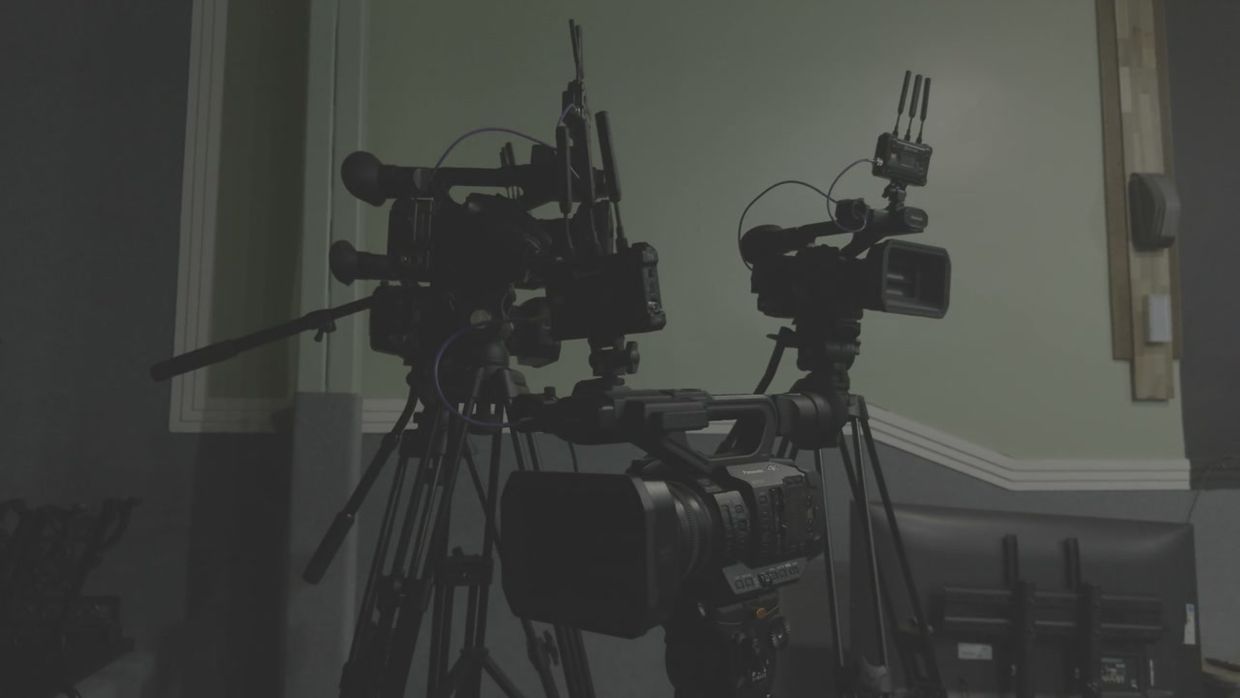
Two audiences, each designed in its own right
Broadcast-grade production for the room and the stream, where the remote audience is a designed experience, not a feed.
What this includes
Multi-camera broadcast direction
Streaming and platform setup
Speaker briefing and rehearsal
Recording and post-event edit
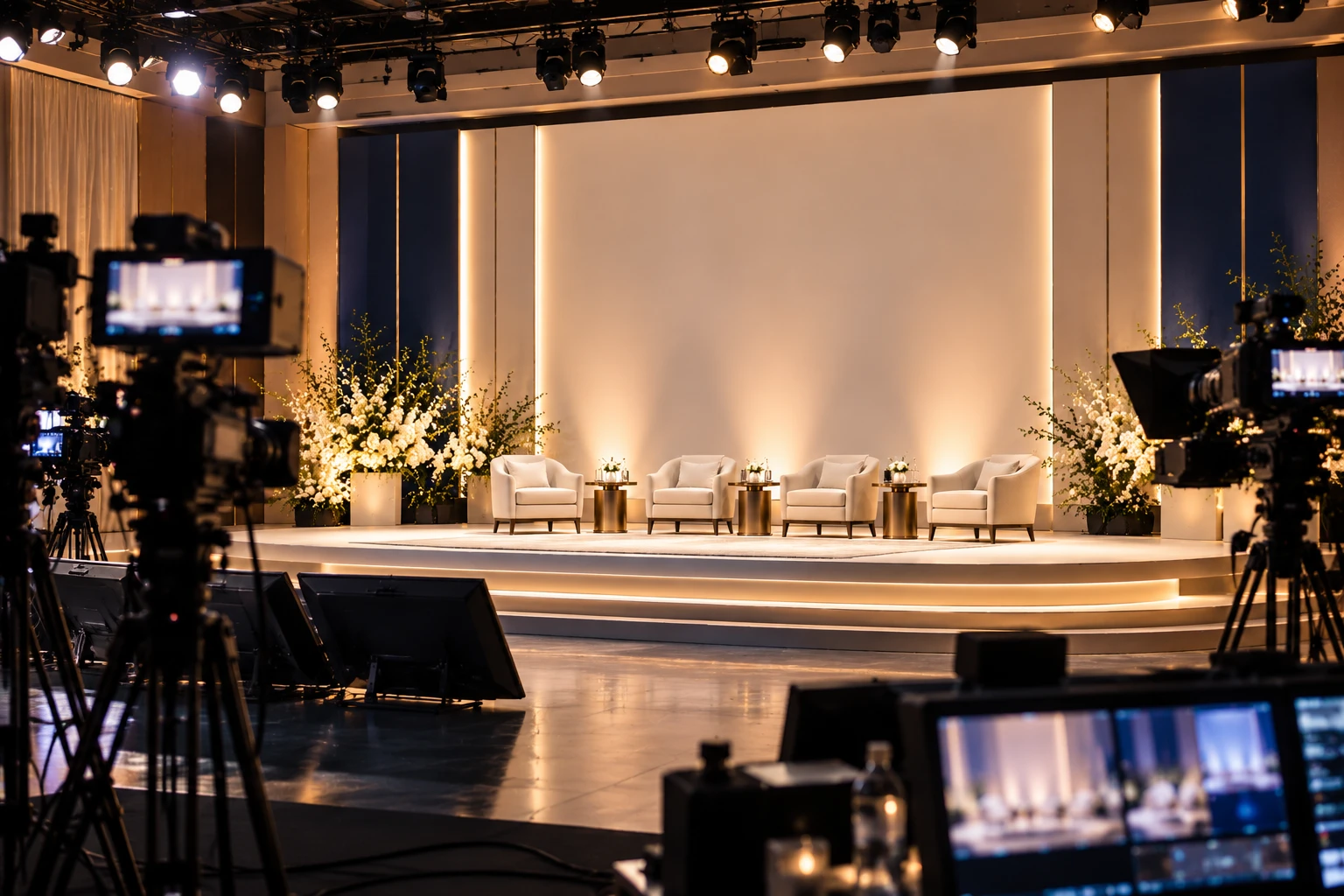
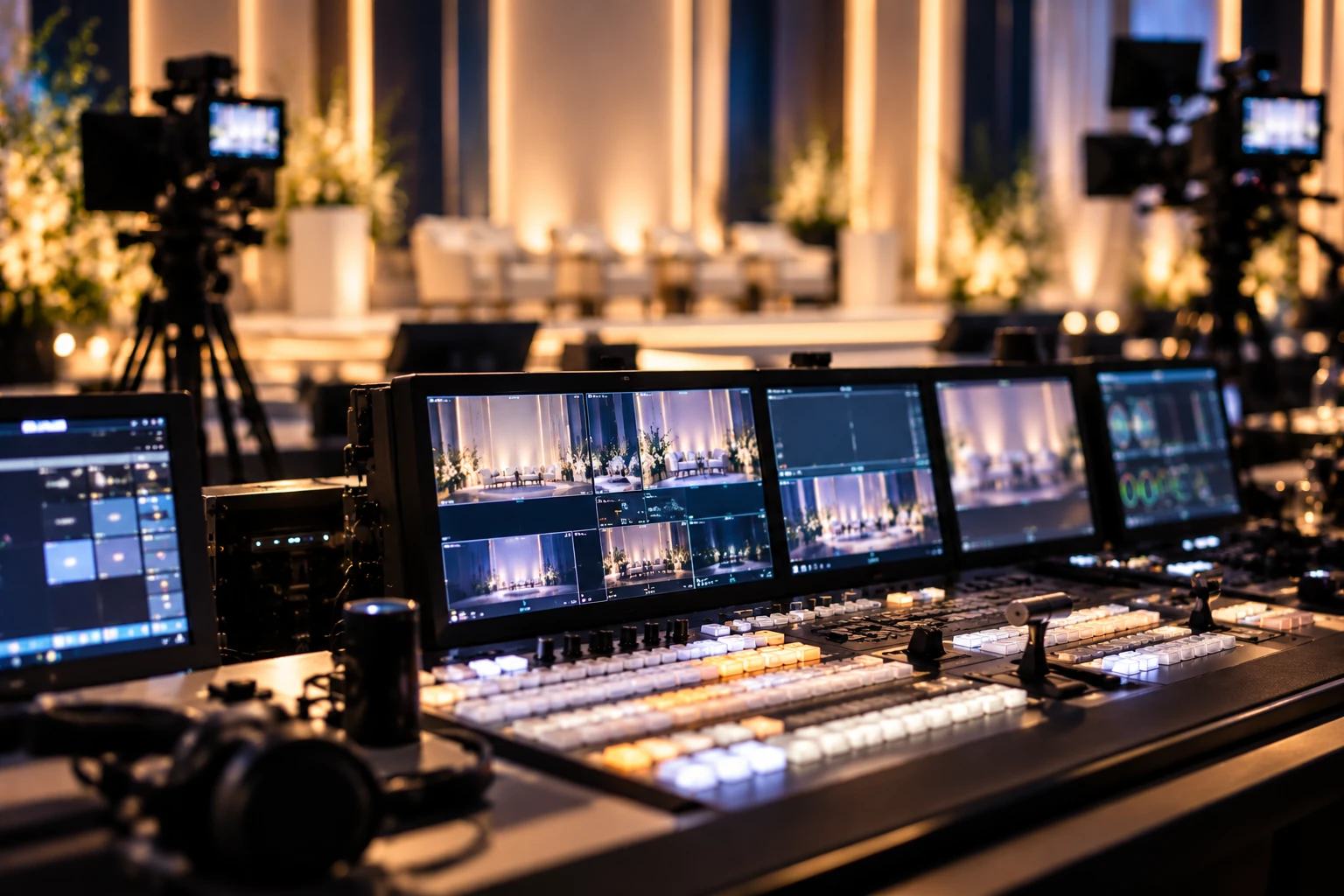
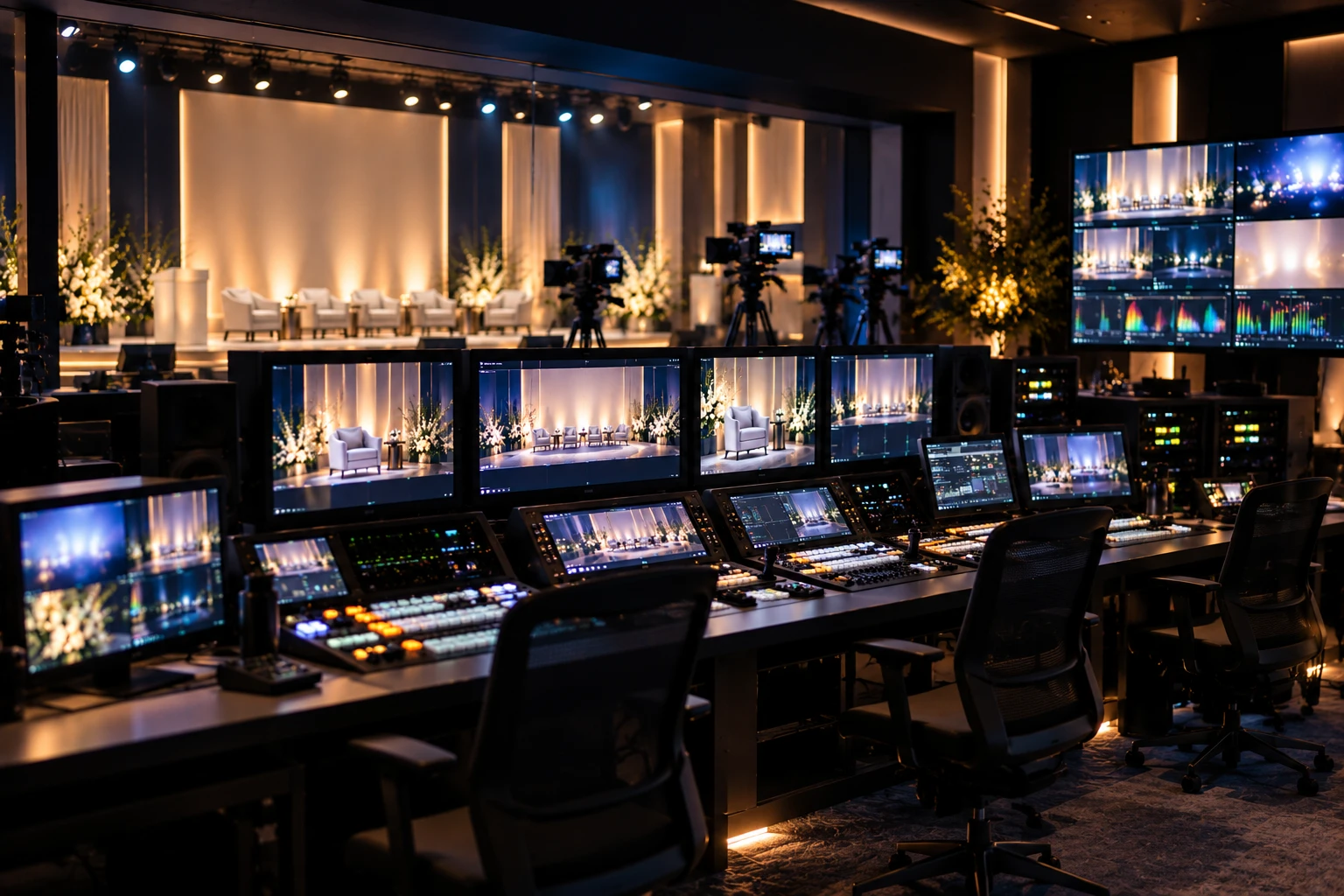
The process
How we deliver it
01
Two run sheets
The room and the broadcast planned together, each with its own cues.
02
Studio and platform
Cameras, vision mixing and streaming tested end to end before the day.
03
Speaker rehearsal
Presenters briefed for both audiences and rehearsed on camera.
04
Direction and record
The stream is cut live; the recording is edited for use afterwards.
Two audiences
The remote audience can leave with one click
An audience in a hall stays because leaving is conspicuous. An audience online leaves the moment the feed gets dull. They are two different rooms and only one is forgiving.
Most hybrid events are a live event with a camera at the back. The audience in the room gets an event; the audience at home gets a wide shot of somebody else’s event, and leaves.
That is not a technology failure. It is a design decision nobody made.
The remote room is designed in its own right
We plan two running orders that share a spine. The room gets the length, the applause and the break; the stream gets tighter segments, cleaner content and something to do when the room is at coffee — an interview, a piece of film, a host who acknowledges the people watching rather than talking past them.
This is not more content for its own sake. It is the difference between a broadcast and a security feed.
Redundancy is a decision, not an accident
Encoding runs twice. The route out of the building does not depend on a single provider or a single cable. Audio is taken from the desk rather than from a camera, because tolerable pictures with good sound hold an audience and the reverse never does.
Every one of those is a cost, and every one is proposed openly rather than buried. If a budget will not carry full redundancy we say which single point of failure you are accepting and what it looks like when it fails.
Speakers rehearse on the actual path
Not on a test call, and not on a producer’s laptop. On the machine, the connection and the room they will use, with the content they will actually present, through the platform the audience will actually watch.
Remote speakers get a lighting and audio setup simple enough that they will follow it. The most common failure in a hybrid event is a senior person appearing backlit and inaudible, and it is entirely preventable a week beforehand.
The room still has to work
A hybrid event is not an excuse to under-produce the live half. Screens, lighting and audio in the hall are built by our own production services to the same standard as a corporate conference — because the people who travelled are the ones most likely to notice if the event was made for the camera instead of them.
Questions
Before you enquire
Which platform do you use?
Whichever one your audience already has, in most cases. The platform decides far less than people expect — what decides a hybrid event is the direction, the audio and whether the remote audience was given a reason to stay. If your organisation has a platform it is committed to, we produce into it rather than arguing for another.
What happens if the connection drops?
There is a second path, and it is tested before doors. Redundant encoding and an independent route out of the building are the baseline, because a single connection is not a plan. We also decide in advance what the stream shows if the worst happens, so the remote audience sees something deliberate rather than a frozen frame of a speaker mid-word.
Can remote attendees actually take part?
They can, and the decision to let them is a real one rather than a feature to switch on. Questions from the stream have to reach the stage through somebody whose job that is, and be answered on camera. If nobody is going to do that, it is more honest to run a clean broadcast than to open a chat nobody reads.
Do you record and edit afterwards?
Yes — an isolated recording of each camera and each source rather than only the cut programme, because the edit you want in a fortnight is rarely the cut you called live. Sessions come back as individual pieces that can be published separately.
How many cameras does a session need?
Enough to cut away from a speaker who is standing still, which is fewer than most proposals suggest and more than one. The number follows the format: a panel needs to see who is being addressed, a keynote needs the screen content as a clean source rather than a camera pointed at a projection.
Can speakers join from their own location?
Yes, and it is the part most likely to fail, so it gets the most rehearsal. We test each remote speaker on their own machine, their own connection and their own room before the day, and we send a lighting and audio setup they can actually manage. A remote speaker who looks worse than the room damages the whole broadcast.
Related
Also in this group
Enquire
Tell us about your event
Share the occasion, the date and roughly how many guests. We will come back to you with how we would approach it.